
Keystage history
10 key messages about teaching significant people in KS1 history
The most important changes in the way we teach this aspect of the KS1 curriculum are: a. the need to link people through a theme, so that pupils make comparisons over…
Read More
Berlin Wall – If relations between the superpowers were improving in the late 50s, why was the Berlin wall built in 1961? A Bone in the throat
This multi-faceted session starts with students having to shape their understanding of the reasons for the building of the Berlin wall in 5 optional ways: Read the historian’s mind. Students…
Read More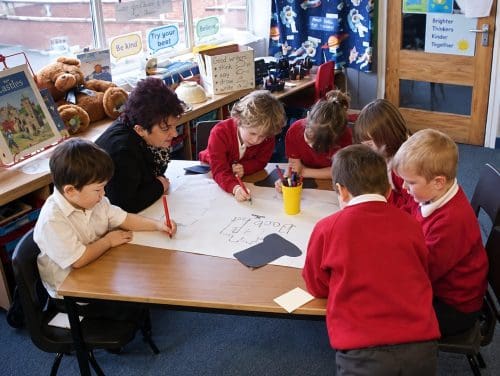
Common Assessment Tasks In History at KS1
It is often difficult knowing how to assess pupils’ historical thinking at KS1. Are we simply testing literacy and /or recall? But what about historical understanding? Faced with this problem,…
Read More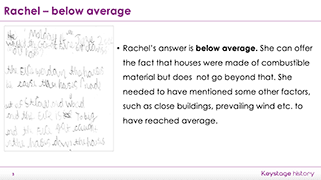
Judging pupils’ work in history at KS 1
This section of the site offers a few words of advice about assessing individual pieces of work and provides commentaries on actual examples of pupils’ assessed work from 2018 onwards….
Read More
Principles of good assessment in history at Key Stage 1
Assessment in Foundation subjects is not well-developed, and is nearly always found wanting in successive OFSTED reports. When assessment in the Core dominates is it really that surprising that teachers…
Read MoreProgression in history at Key Stage 1 by Skill / Concept
The problem Trying to secure progression within your Key Stage 1 history curriculum is not always as easy as it might seem. Sometimes it feels like trying to pick up…
Read More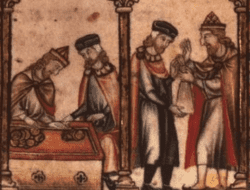
Migration – If England was the safest place in Europe for Jews to live in Henry II’s reign, why then did Edward I expel them just 100 years later?
By posing this enquiry question in a slightly paradoxical way, students are encouraged to go deeper in the explanation than simple anti-semitism. Having steered them through a simple narrative covering…
Read More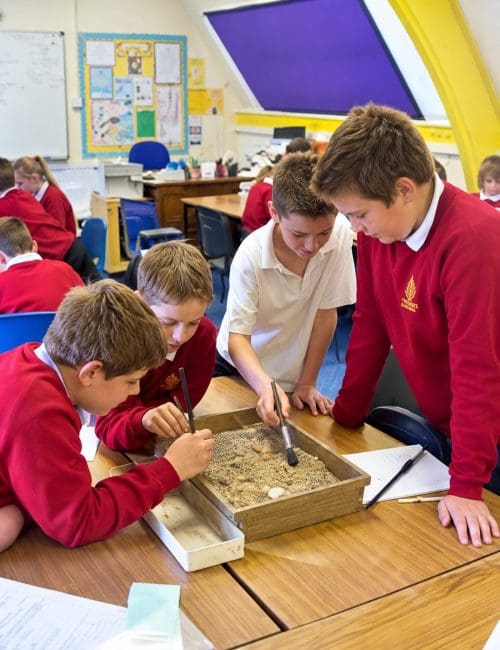
What would your pupils say about getting better at history, when they leave your school?
Recently two university education departments carried out a broad-sweep survey of primary pupils’ experience of history at KS1 and 2 and asked specifically: “What does it mean to get better…
Read More
Excerpt from recent OFSTED report from 2021
As its impossible for you to know what comments OFSTED are making when commenting on history in individual schools, we undertake a systematic trawl from time to time to ensure…
Read More
6 signs to look for to show your pupils are becoming historically literate
1. Understanding how it is possible to know about the past Pupils show an understanding of how it is possible to know about the past, even though there is no…
Read More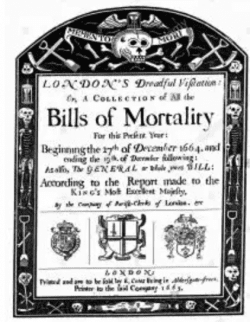
Teaching KS1 pupils to question the ‘FACTS’ about Great Fire; focus on number of deaths
Take the simple assertion (to found in in most books pupils will come across), that only 6 deaths resulted from the blaze. Do the pupils find this surprising , given…
Read More
It’s time to think about the teaching of time at KS1 and 2
Time is probably the concept most fundamental to understanding history. This presents problems, of course, particularly with the youngest children. But just because its a slippery concept doesn’t mean we…
Read More
The state of primary history 25 years on
One of the drawbacks of being a historian is you just can’t help yourself when it comes to looking at historical documents. Yesterday I came across my copy of HMI’s…
Read More
Take a new look at assessment in history in your school.
Now is the perfect time to get your assessment system for history in better shape. If colleagues know the criteria against which pupils’ work in history will be judged (and …
Read More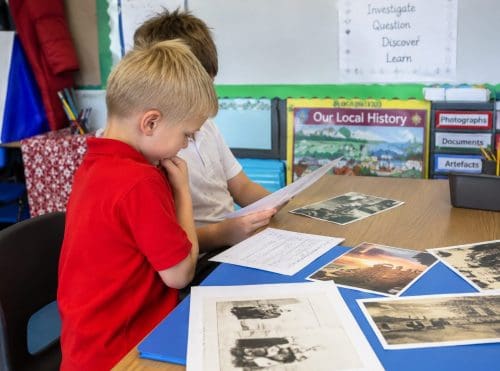
Scales of planning in primary history
Making sure you don’t leave out key things and don’t waste your time duplicating Planning can seem a real chore, but it is key not only to maximising the opportunities…
Read More
5 key tasks for the history subject leader
Being a history subject leader can often be daunting, especially if you have received very little training and have no avowed expertise in this area. It can also be overwhelming…
Read More10 top dos and don’ts of using knowledge organisers in primary history
Used well, knowledge organisers are a really powerful resource but it all depends on how they are used. However attractive and packed with facts it might appear, if it just…
Read More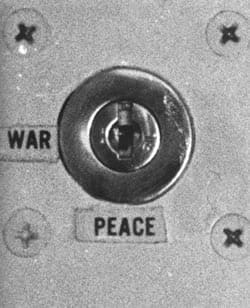
Teaching the 20th Century World to Key Stage 3
For many pupils this will be their last topic in KS3 history, though some history departments prefer to end with a retrospective long term study. Most pupils enjoy the 20th…
Read More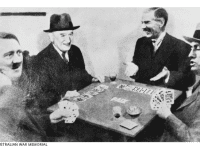
How well did Chamberlain play his cards at Munich? A KS3 smart task
This smart task asks pupils to think a little more deeply about why Chamberlain adopted the policy of appeasement. It is so easy to lampoon him as a naive who…
Read MoreTop 10 things your KS2 pupils need to know – Early Islamic civilization
Top 10 things your KS2 pupils need to know, and remember, about Early Islamic civilization 1. 1000 years of extraordinary activity after AD 700 For approximately 1000 years, after AD…
Read MoreTop 10 things your pupils need to know – Roman Britain
Top 10 things your pupils need to know about Roman Britain 1. Roman Britain was part of a huge empire ruled from Rome Roman Britain was part of a huge…
Read More
I’m a new subject leader. How do I know if pupils are making the progress they should in history?
Getting a handle on progression is complicated. There are lots of superficially appealing lists of competencies that link to each age group each produced by commercial companies who have not…
Read More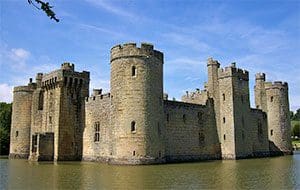
Teaching KS3 History: Medieval Britain
A wide range of lessons are showcased here for teaching Medieval Britain at KS3 because the medieval period is highly popular. All lessons have full resources to download. As many of…
Read More
Knowledge rich: necessary but surely not sufficient? Or 5 good reasons not to listen to Nick Gibb, the schools minister
In a speech delivered last week, July 21,2021, we had to read, or listen to, the same ill-informed clap-trap from a government minister banging on about the knowledge-rich curriculum as…
Read More10 vital things primary history subject leaders should draw from OFSTED’s review July 2021
On 14 July 2021 OFSTED published its lengthy review of research findings into school history. You can access it here. I actually think there are good reasons NOT to read…
Read MoreHistory in outstanding primary schools – OFSTED’s view of strengths and weaknesses April 2021
Posted by:Tim Jenner HMI, Subject Lead for History, Tim Jenner HMI, Ofsted’s subject lead for history report April 2021, reports on the findings from our history subject inspections. Between January…
Read More
Recent ‘remote’ OFSTED report Spring 2021; systems for testing pupils’ subject knowledge July 2021
The recent focus on pupils knowing the content of subjects has given rise to some interesting observations from OFSTED. In one of the most recently published reports on a primary…
Read MoreGetting your KS3 assessment right in history: 12 step guide
You will know from the activities provided on the site that we are firm believers in a planned series of varied diagnostic tasks taken under test conditions which show how…
Read More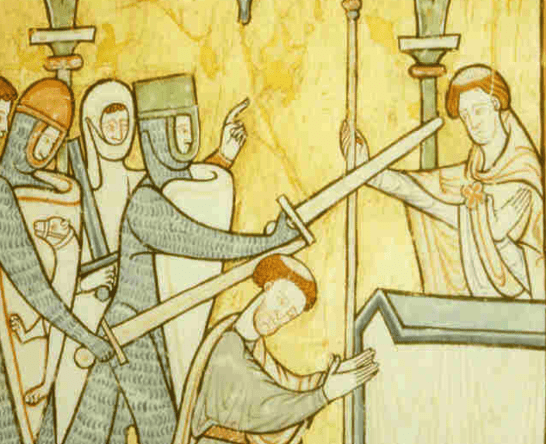
So how exactly did Thomas Becket die: a source-based investigation
Working as historical advisers to a movie director, pupils attempt to reconstruct the scene of Becket’s death by cross-referencing and then evaluating a range of principally visual sources from the…
Read More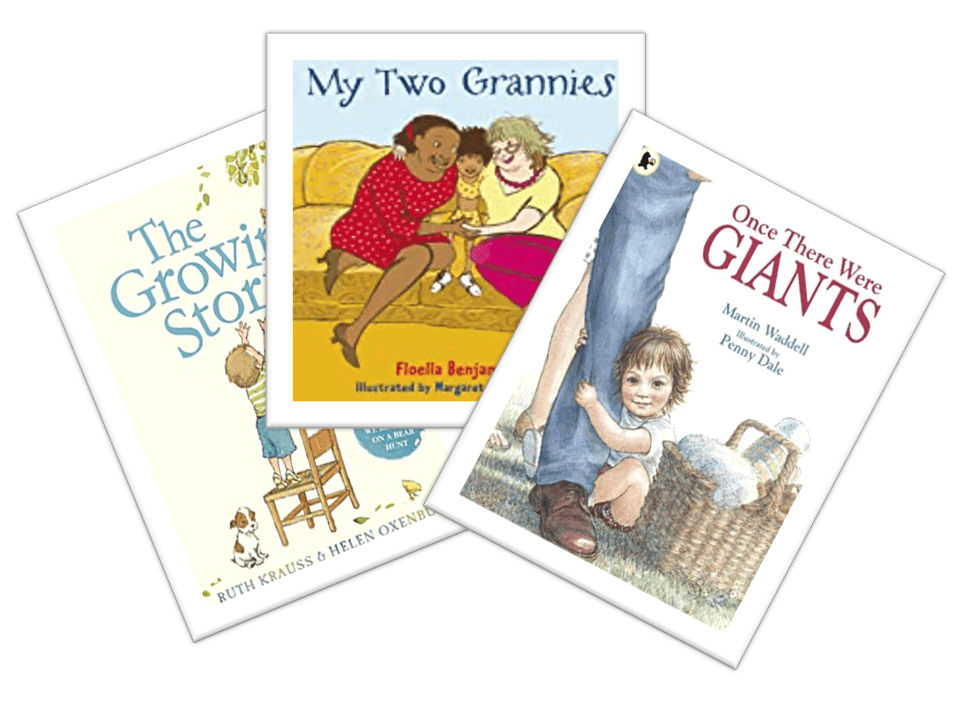
Preparing for the new EYFS framework from September 2021
Teaching about the past in EYFS Although most schools and settings prefer not to refer to history as a discrete subject on the Early Years curriculum, there is always a…
Read More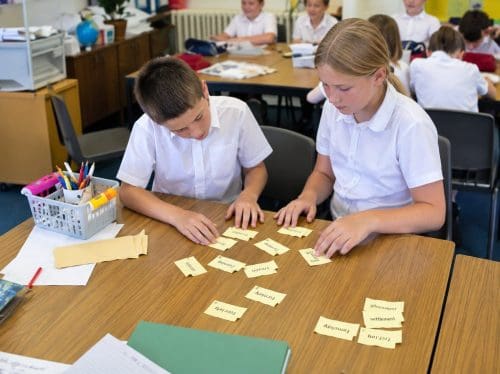
7 searching questions for you to ask about your KS2 history curriculum
Every now and then it is worth just ensuring that your KS2 history curriculum is as robust as it should be. There is no more important task for the history…
Read More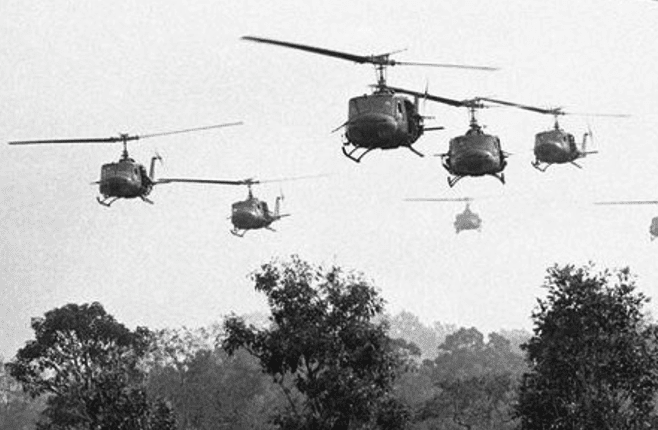
Vietnam War – Why did Johnson really escalate the war in Vietnam?
If Johnson claimed that he wanted peace when he became president, why did he escalate the war in Vietnam and drop more bombs there than were dropped in the whole…
Read MoreWhat should my Y6 pupils be able to do in history? The Big 5
By the end of Year 6, it is important that pupils not only build up good chronological knowledge, they also need to be able to make comparisons across time between…
Read More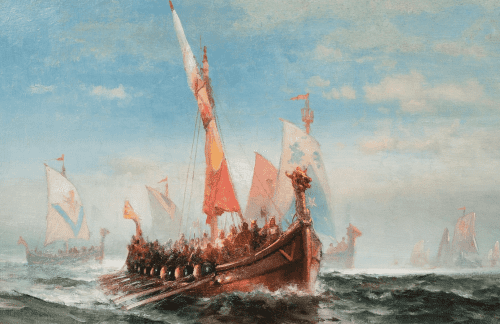
KS2 Example Planner – Vikings Medium Term Planner
Here is a typical example of a medium term plan which exist for all main KS2 topics, in line with the most recent history National Curriculum. You will notice that…
Read More
Ancient Egypt : a new Pompeii?
A few weeks ago, Egyptian archaeologists the discovery of a “lost city” of the pharaohs dating back some 3,400 years that they described as the biggest ancient settlement yet uncovered…
Read More
The place of vocabulary building in your history lessons
I get a lot of phone calls asking why there are no vocabulary lists on the website. Teachers are asking because OFSTED is expecting it of them. They want to…
Read More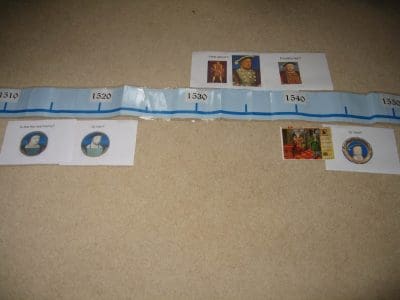
Beyond Face Value – KQ1 – Henry VIII a question of interpretations. Could you spot Henry VIII in a police line-up?
This is a really fun lesson which shows children what is meant by historical interpretations in an engaging and accessible way. It appeals to both visual and kinaesthetic learners by…
Read More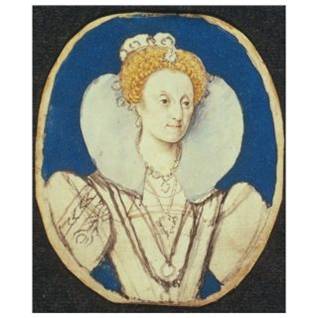
Beyond Face Value – KQ2 – Elizabeth I portraits – Why do Elizabeth I portraits mysteriously start showing her looking younger towards the end of her reign?
This powerful lesson on Tudor portraits as propaganda gives pupils the chance to appreciate that things aren’t always what they seem. Elizabeth wanted to be shown in a particular light…
Read More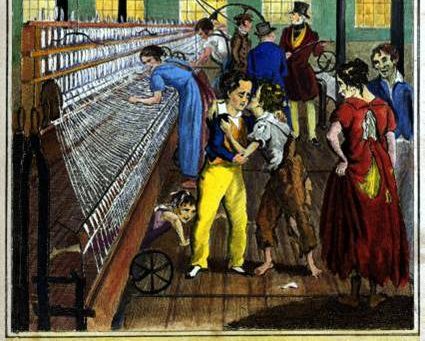
Beyond Face Value – KQ3 – So what were Victorian factory conditions really like? A Y6 study in provenance
In this lesson, pupils are shown 3 images of factory conditions from early/mid Victorian times. Using their knowledge of factory reform they feel confident that they can date the factories….
Read More
KS1 Medium Term Planner for Spreading the Word: Caxton to Bell
The ‘significant people’ element of the KS1 history curriculum now requires pupils to compare achievements of individuals within a linked theme – in this case communication in a topic called…
Read More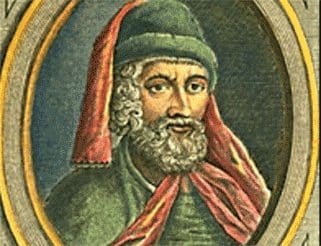
Caxton and Bell – KQ1 – What did Caxton do that was so important to us today?
Following a mysterious PowerPoint slow reveal in which pupils look for clues to Caxton’s fame, pupils are given a brief illustrated summary of the key moments in his life which…
Read More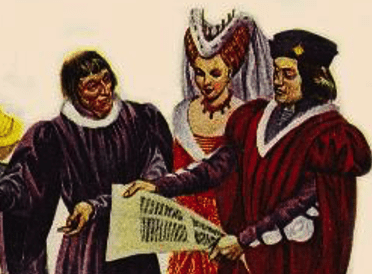
Caxton and Bell – KQ2 – Quick the King and Queen are coming! How Caxton changed the way books were made
Having shown pupils how books were made before Caxton’s time, the main focus of the lesson is on how the new system worked. To prevent this being a dull session…
Read More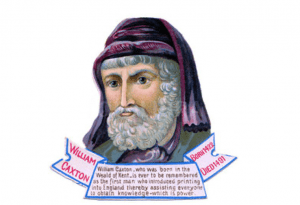
Caxton and Bell – KQ3 – How and why should Caxton be remembered?
Having discussed the possible options for ways of commemorating his achievement, pupils have to create a new plaque on his statue, because the old words have worn and faded away….
Read More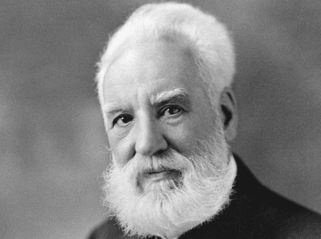
Caxton and Bell – KQ4 – How did Alexander Graham Bell manage to make a telephone work so long ago? and why did he want to?
The focus here is on sequencing of events, looking for turning points in his life and for his personal motivation. How did his life choices end up with him inventing…
Read More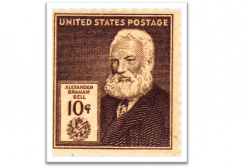
Caxton and Bell – KQ5 – Why was Bell’s invention so important, then and now? Bells and whistles!
Pupils write a plaque to go on the side of a new statue that has been built to commemorate Bell’s achievement in response to government’s offering a prize to the…
Read MoreARCHIVED – Teaching about the past in EYFS

Preparing for the new EYFS framework Although most schools and settings prefer not to refer to history as a discrete subject on the Early Years curriculum, there is always a…
Read More
Caxton and Bell – KQ6 – How has the telephone improved since the days of Bell?
This session really helps pupils to get a strong sense of change through time, linking the past of Bell’s time to the present bringing things right up to date. It…
Read More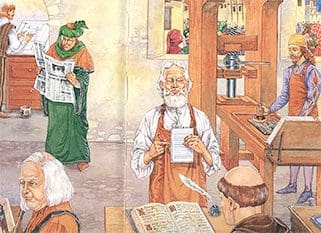
Fun activity on anachronism to help children develop a sense of period when learning about Caxton
Getting young children to develop a sense of period and an awareness of how different the distant past was to the present is never easy- a bit like picking up…
Read More10 Things to do to make your history teaching better at KS2
1. Teach through historical enquiries. Enquiries are the most effective subject pedagogy in history, not least because when well drafted, they make pupils think. You will notice that all the…
Read More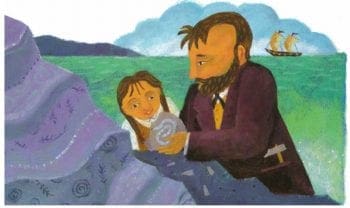
Mary Anning – KQ1 – Why do we remember Mary Anning?
This introductory session attempts to place Mary’s life in a broader context of time and place and to whet pupils’ appetite, without telling much of the story of her life….
Read MoreWritten by Neil Thompson
All content on Keystage history is written and quality assured by Neil Thompson, a former history teacher, county history adviser and Ofsted inspector with more than 30 years’ experience in history education.