
Leading History

Raising the profile of history at KS1
One of the main roles of subject leaders for history is to be a passionate advocate for the subject. The following article offers practical advice as to how to turn…
Read More
Motivating colleagues to teach history
1. Give praise Give praise wherever possible e.g. when you see evidence that your colleagues have: • Inspired pupils • Created high quality displays • Produced thoughtful planning • Taken…
Read More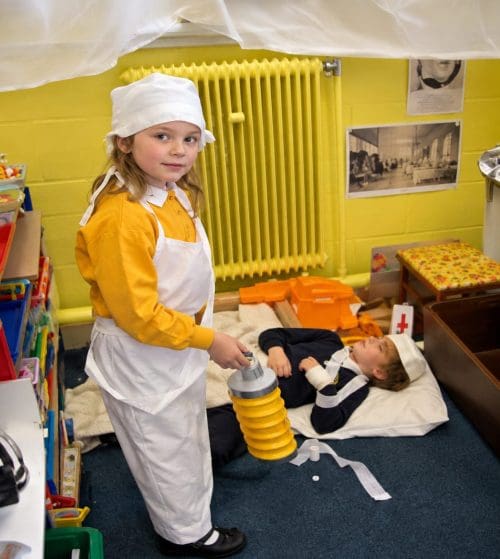
Case study: The importance of history to the curriculum – history policy at Vicarage Primary
History is all about people. The study of people of different types from different times and different places is the most important aspect of our work. History fires pupils’ curiosity…
Read More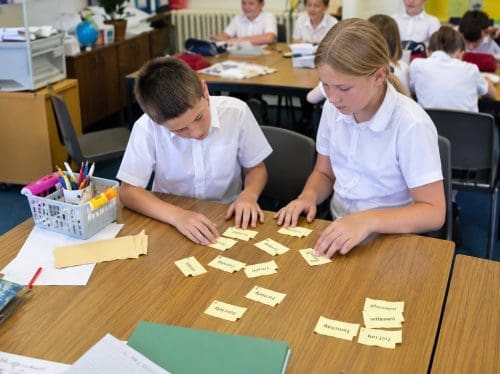
Keeping up-to-date with developments in primary history
Every few years, the Primary wing of the Historical Association carry out a survey of primary schools to see what the current picture of history teaching and provision looks like….
Read More
Taking on history leadership: doing the right things – 10 key steps
Taking on subject leadership can be a daunting prospect, especially if it is your first. When there is so much to do, and so many calls on your limited time,…
Read More
Principles of good assessment in history at Key Stage 1
Assessment in Foundation subjects is not well-developed, and is nearly always found wanting in successive OFSTED reports. When assessment in the Core dominates is it really that surprising that teachers…
Read More
Using data to improve history teaching and learning at Key Stage 1
Given that there is no subject-specific data on history at KS1 this might seem a strange inclusion on the site. Those of you who feel that there is quite enough…
Read More
Raising attainment in history at Key Stage 1
Experience of working with highly effective subject leaders over eighteen years has enabled me to distil SEVEN key factors that collectively contribute most to raising attainment. Factor 1: The school…
Read MoreSelf-evaluation for history at Key Stage 1 and 2
For Primary history subject leaders it is very important to get a clear sense of perspective on self-evaluation. I f you are not careful you will spend your very restricted…
Read MorePolicy and vision for history at Key Stage 1
There is much debate about the value of a history policy, not least how long it should be!! A couple of examples are provided here to give you a feel for…
Read MoreLeadership in history
When looking at leadership in history a careful balance has to be created between offering generic advice (which you could get elsewhere) and very subject-specific advice, which in its attempt…
Read More
Forward planning in history at Key Stage 1 and 2
It goes without saying that a history improvement plan must reflect the whole school approach. There is no need for it to be different. Usually the following structure is used…
Read More
Prioritising your work as history subject leader at Key Stage 1
When you are new to the role, your first priority must always be to establish the health of the subject before you start on any grand improvement schemes. This may…
Read MoreDeveloping your staff
Nearly all teachers enjoy teaching history and will want to improve the quality of their own teaching so that children can make better progress. However, the demanding task of improving…
Read More
Monitoring in history at Key Stage 1
Almost every subject leader I know feels that they ought to be doing more monitoring, as if ordered to ‘Go forth and monitor!’ Because time is so scarce for this…
Read MoreWritten by Neil Thompson

All content on Keystage history is written and quality assured by Neil Thompson, a former history teacher, county history adviser and Ofsted inspector with more than 30 years’ experience in history education.