The pupil voice: let the children speak
This article draws on the wisdom, insight and practical experience of my friend and colleague Ken Wilby who was the English inspector who sat at a desk opposite mine for more years than I care to remember.
Interviewing pupils
Much has been written in recent years about the value of listening to the pupils’ voice, not least in terms of the new OFSTED arrangements for selfevaluation. High on the Every Child Matters Agenda, few can now chose to ignore it. So what exactly should we be doing?
Recognising the importance of interviews
Unless you appreciate the advantages of listening to the pupil voice it will not be given high priority. It will always remain that awkward timeconsuming task that you know you ought to do, but no-one dies if you don’t. You need to be convinced it is worth sacrificing your time and your colleagues’ personal time if the school structures don’t provide for it.
What will it tell us that other things can’t?
Is students’ learning deep or shallow? Does it outlive the last lessons plenary? Can children connect and make links between different aspects of history?
Who does it?
It has been suggested that two adults are involved: one is the interlocutor who asks the questions; the other the class teacher. The teacher’s role may at first seem a little superfluous, but it is very surprising how pupils respond to questions phrased slightly differently to how you would have done it.
How many pupils?
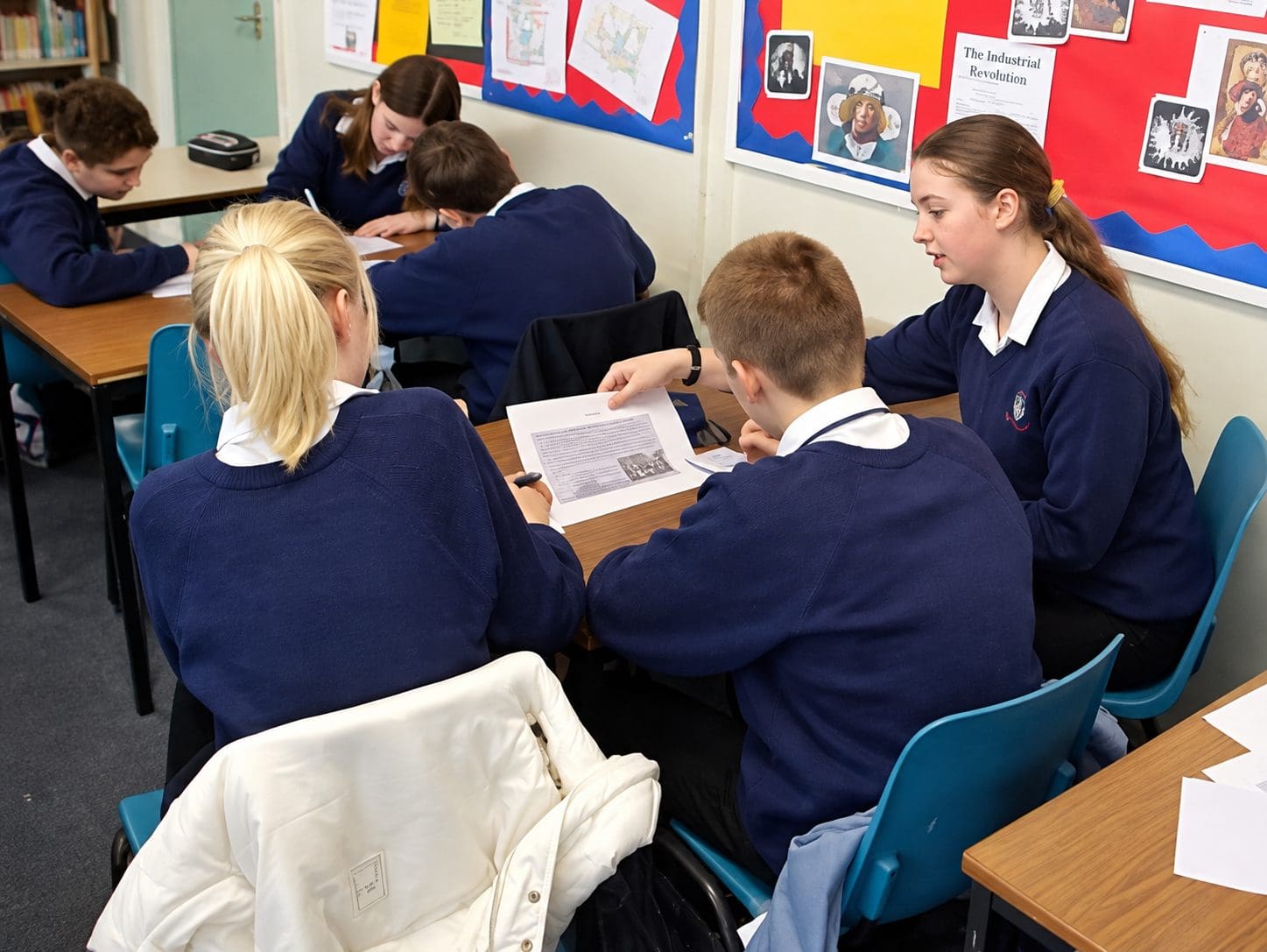
The optimum number would seem to be six, sat in a relaxed manner around a circular table using first names throughout. The ‘No hands–up’ rule applies to encourage genuine discussion. The class teacher is non-participant; non-negotiable. He/she needs to keep away from the table, out of pupils’ field of vision. The role is simply secretarial.
What should the interlocutor ask?
Although you will not want a closely scripted list of questions from which you do not depart, it is nearly always better if you do start with some specific warm up questions. These are not vague attitudinal prompts, for these can lead to pupils saying what they think you want to hear. The odd posturing is not unknown as well!! Instead, think of some specific history questions on the topics just studied.
Who should be targeted?
There are 4 or 5 possible target groups. 3
- Deliberately mixed group to get a feel for their views. There are no preconceptions. Emphasis is on identifying possible issues.
- At the end of the year target three of the most able pupils from each class in a given year. If they do not understand, who in the group will have done?
- Target a group during a teaching sequence, a before and after
- Test your hunch Follow-up intuitive or data-driven hypotheses by focused interview. This may yield evidence about attitudes and behaviour as well as learning styles etc.
- What are the topics you have most enjoyed this year?
- Which characters in history have you liked?
- Which events have you found it hard to understand?
- What helps you to learn in history?
How should the meeting be conducted?
- To make the pupils feel special, I provide a high quality pen and paper , thus ensuring that only one person writes whilst the others talk
- Ask the pupils to think aloud. Encourage them by using phrases such as “I noticed you paused at that point, what were you thinking of saying?”
- Pupils should not feel under pressure to get the answer right. It is as much about how they think as what they have learned. Many enjoy the slightly unusual dialogue with an adult who is not their teacher and often visibly blossom as the meeting progresses.
- Don’t be afraid to set puzzles. Pupils enjoy the challenge as they are not put on the spot as individuals. They enjoy the lightness of the mood, the subtlety of the occasional, all-important humour
- Resist the temptation for you as interlocutor to take on the role as teacher. Let the opportunities to correct or develop pass by.
Confidentiality
This is a perfectly natural but usually unfounded concern. Nearly all pupils are loyal and extremely responsible. They know not to name names, but some may need reminding!
Concept cards
This is a great way of finding how deep the pupils learning is. You agree with the teacher in advance what the key concepts pupils should have learned this year are; the first order concepts such as trade, empire, revolution. These are placed on different pieces of A5 coloured card within a large A4 envelope placed at the centre of the table. Pupils take it in turns to take out a card which signifies an invitation to talk about that topic, on their own terms, and what it means to them. This continues until each has had a turn at a topic. When they start ‘drying up’ others can chip in.
Follow up
The teacher feeds back to colleagues on the things the pupils did well and where there might be some lingering confusion. This information should then be used to modify particular curricular targets. The whole process marks a move away from performance-orientated culture to a learning-orientated one.