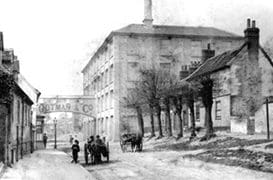
Ipswich is one of England’s oldest continuously inhabited towns, with a history shaped by trade, craftsmanship, and maritime connections. Settlement in the area dates back to Roman times, but Ipswich grew significantly during the Anglo-Saxon period, becoming one of the country’s most important ports. By the Middle Ages, the town was a centre for wool, cloth production, and overseas trade, particularly with northern Europe. Ipswich’s prosperity supported the development of strong civic institutions, churches, and guilds.
In the Tudor and Stuart periods, the town remained an important regional hub, although its fortunes fluctuated with changes in trade and politics. During the nineteenth century, Ipswich expanded as an industrial and agricultural market town, benefiting from railway connections and port facilities. While it never became a major industrial city, Ipswich retained its importance as a commercial and administrative centre. Today, the town’s historic waterfront, medieval streets, and civic buildings reflect its