The title of this section reflects the fact that the new curriculum should not any longer be boxed up into just six discrete silos called study units. Instead there should be fluidity between and across periods and places. What you will find here initially is a response to the attention paid to slavery recently with the bicentenary of the abolition of Britain’s involvement in the Transatlantic Slave Trade. The first lesson on the list asks pupils to imagine they are advising a film director. How should the Middle Passage be shot? The second, looks at the key question as to why the slave trade was abolished in 1807 when 20 years previously few would have predicted it. The third, links history and literacy through the use of poetry. The fourth, is a superb enquiry using original slave plantation records to encourage pupils to test and then generate hypotheses. The fifth, takes an overview approach in which pupils have to create their own living graph to look at the whole movement for Civil Rights as a long-term evolutionary movement , not a one-off event.
Outstanding new on-line teaching approaches
Wilberforce and the Slave Trade For a recent and accessible interpretation of Wilberforce’s true contribution to the ending of the Slave Trade go to the BBC website
In addition to imaginative coverage of the triangular trade, oppression and survival, resistance, and abolition there is an interesting angle on impact which helps considerably with work on significance.
1.The abolition campaign
2.Resistance to slavery
3.People involved in abolition, all richly resourced with authentic sources, including letters and flyers.
There is an excellent Civil Rights timeline here Other useful sources of inspiration for outstanding lessons are thin on the ground. One you will know about is Ian Dawson’s excellent site. The other, a relatively new kid on the block, is the History Resource Cupboard, created by two teachers who worked very closely with me for a number of years. I know the ideas come from a good stable. Neil and Richard are both outstanding teachers so it is well worth looking at what they have on offer, some of which is free. The following Key Stage 3 history lessons for teaching the Black Peoples of the Americas and slavery have all been judged to be outstanding according to OFSTED criteria. You will find a wide variety of teaching and learning activities and full lesson plans as well as a rich array of teaching resources including PowerPoint® presentations.
Key Stage 3 Outstanding History Lessons
- Rosa Parks – the true story. Open-ended enquiry into what really happened on the day Rosa Parks was arrested, in which pupils raise their own questions and follow their own lines of enquiry after a structured start. Fully resourced PowerPoint with original documents and images.
- Free at Last? How far had the Civil Rights movement come by 1963? Students work out for themselves from a series of photographs what each tells us about methods used by Civil Rights activists. After consulting text books to caption the pictures and place them in chronological order deeper learning happens when they create a living graph and ascribe different degrees of significance to each event.
- What can we work out about the slave trade from just one poem?Deceptively simple way of linking history and literacy in which pupils work on inference and attitudes of the author, using Cowper’s well-known poem.
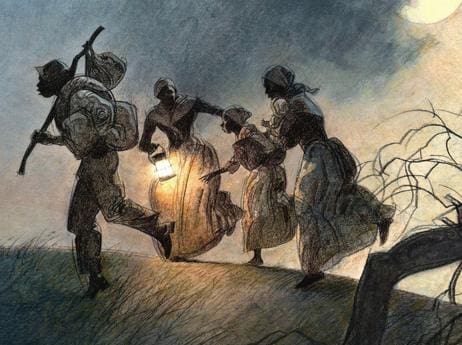
- What made runaway slaves successful? Enquiry in which pupils interpret a range of original documents to work out why some runaway slaves were more successful than others.
- How should we film the Middle passage? How accurate are Roots and Amistad.Pupils use fascinating documentary material to challenge the two interpretations.
- Poacher turned gamekeeper. Why did Britain abolish the slave trade? An excellent study of the dynamic of causation which goes beyond listing, grouping and prioritising to look at the momentum of causation.
- Dread of the lash – what do the slave punishment records show us? A brilliant example of pupils work from the particular to the general. They look for patterns in slave punishment books and then try to write generalised comments which they subsequently check with the textbook.