Teaching Primary History: Ancient Greece Key Stage 2The following Key Stage 2 history lessons have all been judged to be outstanding according to OFSTED criteria. There is a wide variety of teaching and learning activities as well as a rich array of teaching resources including PowerPoint® presentations. New lessons on Ancient Greece will be regularly added to meet the demands of the changing primary curriculum. For other suggested resources click here. >>PLEASE NOTE Although the current government has abandoned the planned changes of the Rose Review and is probably going to back a narrower content-led curriculum favoured by Gove, the advice you will find here still holds good. The proposed curriculum did offer fantastic cross-curricular opportunities, so Planning and Teaching Ancient Greece for 2011 can still be found below. Outstanding Lessons
Want to know what's coming next? Click here to find out Teaching Ancient Greece to Key Stage 2Of all the Key Stage 2 units, this is the one where you can most easily miss the point of why it is on the curriculum. It is not a study of legends, or just gods and goddesses as if they were some imaginary dysfunctional family from a soap opera. The National Curriculum is very clear in stating that it should be about ways of life and beliefs as well as achievements and legacy. Because this is quite demanding stuff, I have chosen lessons on Ancient Greece mainly suitable for Years 5 and 6 and there are some stunners here. The lesson on making ostracons is a fantastic way into Greek democracy. Speaking and listening are massively enhanced through the role play concerning whether to support Pericles' Millennium dome-like idea to build the Parthenon. Contrasting interpretations are dealt with ingeniously through the lesson on the battle of Marathon which also features an excellent history mystery. For enormous fun potential alone, the 'Call My Bluff' and 'Who wants to be a Millionaire' approaches to pictures and replica artefacts from Ancient Athens should win you over. Other resourcesWhy not start by looking at what museums have created on this topic. If you look under Ancient Civilizations in the showme section of the 24 hour museum, you will find lots of interactive on-line material designed for KS2 pupils. For a short 15 min programme outlining how to plan a cross-curricular approach to teaching Ancient Greece see teachers TV Up next
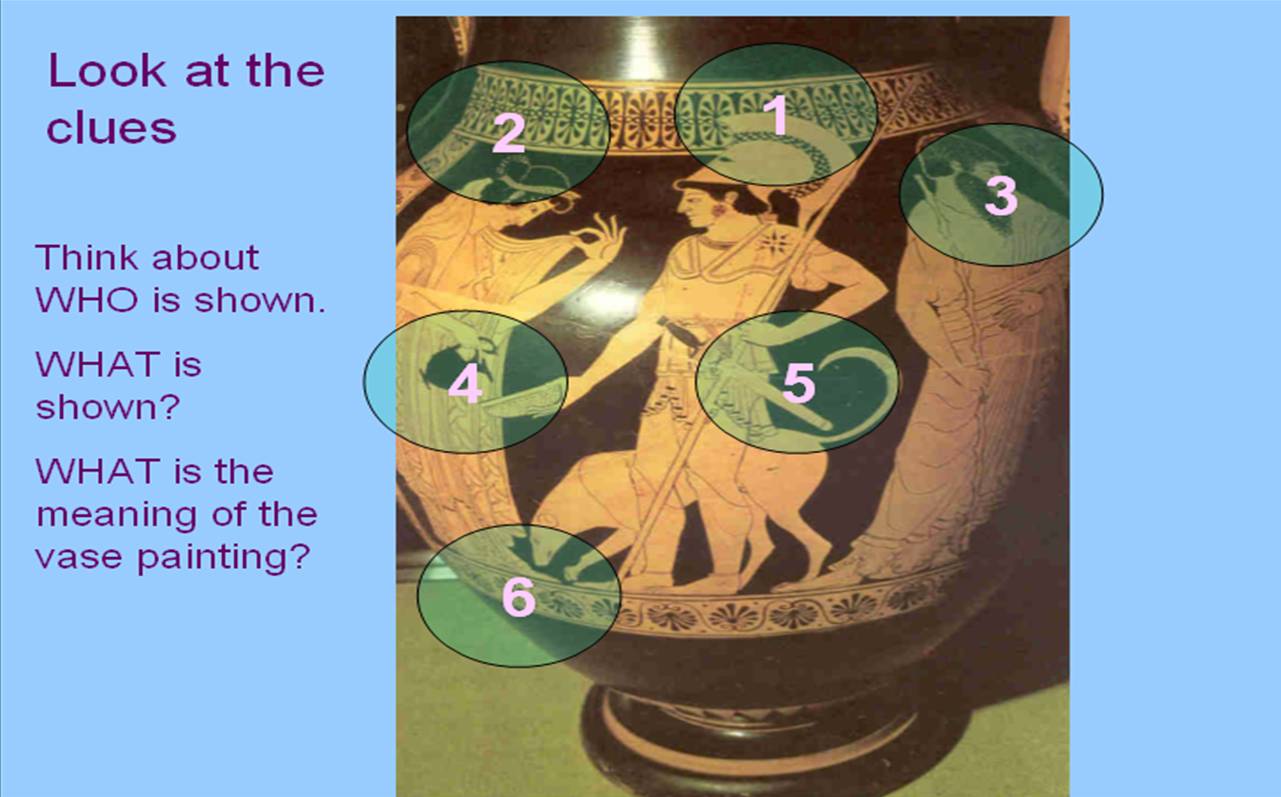
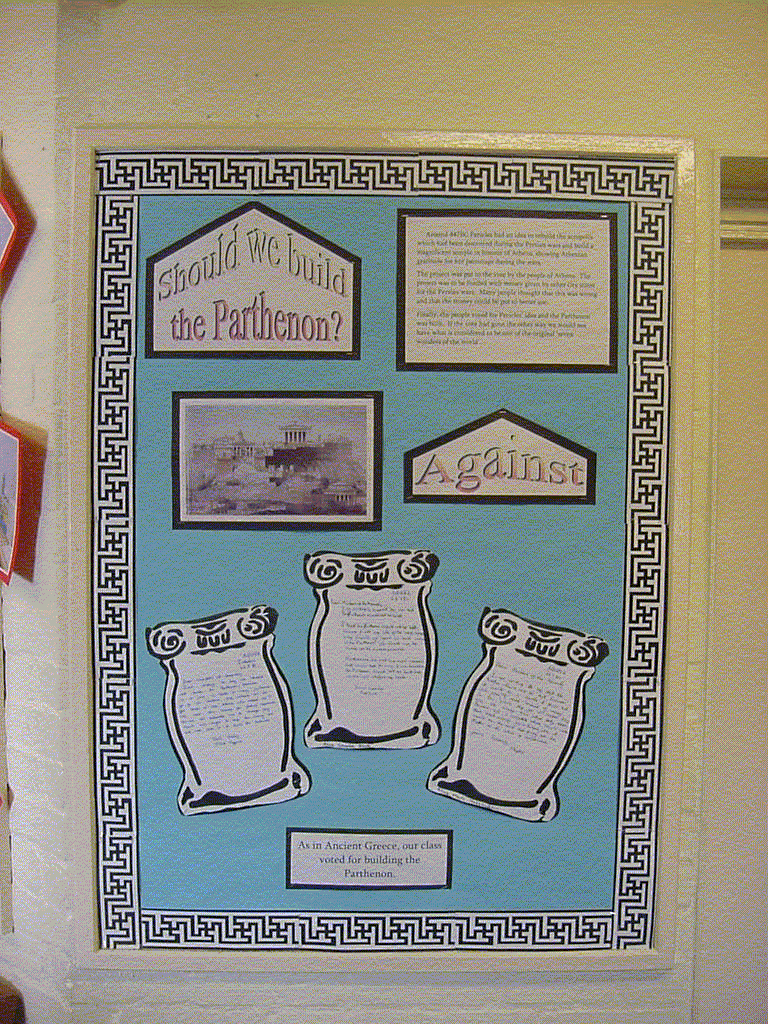
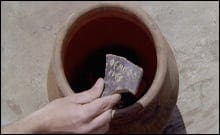
Planning and Teaching Ancient Greece for the proposed new primary curriculum for 2011This planning has been written with the new 2011 curriculum in mind but remember that the bill to implement this was rejected by the House of Commons in April 2010. RationaleOn first sight it may appear as if the study of Ancient Greece has now been removed from the primary curriculum after 20 years. Hooray, some of you may argue. I would not be one of them, however. If, like me, you can see fantastic cross-curricular opportunities, read on. I think this should be taught in the later primary years, so let’s look at what is being recommended for Year 5 and 6 and see if Ancient Greece can be fitted in. The most obvious place comes in L12 when pupils are expected to know the characteristic features and changes within two key periods of history that were significant to the locality and the UK. Footnote 27 tells us that one of these periods could be taken from European or world history. Very few schools currently teach much European history beyond Ancient Greece so this is a clear invitation, without compulsion. If further justification was needed for the inclusion of the Ancient Greeks I would look at the key skills section. a. Undertake investigations and enquiries using various methods, media and sources. All the lessons featured here are enquiry based. The outstanding lesson The answer lies on the Pot provides excellent opportunities for creativity as well as problem-solving. The full lesson and all related PowerPoint slides and activities are available in the subscribers section of the site. b. Compare, interpret and analyse different types of evidence from a range of sources. c. Present findings in a range of ways and develop arguments and explanations. The 'Call MY Bluff' type of activities are ideally suited to this skill d. Consider and debate alternative viewpoints. Pupils are asked to consider why we have different views of key episodes in history e.g. the battle of Marathon. Beyond that you might argue that there is very little to warrant continuing teaching Ancient Greece. It does impact on the locality, in terms of architecture, but that is not sufficient reason. So the really persuasive arguments must relate to what it offers in terms of citizenship. This clearly does not mean labelling hoplites’ armour but it would certainly involve discussion and role play of the democratic process at work. The outstanding lesson on Should we build the Parthenon? provides superb ready-made speaking and listening opportunities. Likewise the hands-on Making Greek democracy come to life? which uses smashed flower-pots to investigate how best to run a country. Intrigued? Planning around key questionsThe whole approach to this topic is enquiry-led. From the start pupils are placed in role using the Mantle of the Expert strategy. They have been employed by the Greek Tourist Board to promote Heritage Tours to Greece. People seem to have the wrong idea about Greece being all sun, sea, sand, clubbing and alcohol. Can the pupils help show off the importance of Ancient Greece to people’ lives today? At the end of the enquiry there will be a presentation including music and dance, the firm’s promotional launch, with parents invited. Resources and outstanding lessons for much of this are available on the subscription part of the site. Key question 1 (shown in detail): What’s so special about Greece now and in ancient times? Learning objectives To investigate where
Greece is and how to get there Key learning activities Learning Activity 2: Links with Literacy and ICT. Pupils produce information text for travellers to Greece on interesting aspects of the Greek legacy, having presented a spoken argument about what are the most important places to visit, sequencing points logically, defending issues with evidence e.g. Should the Elgin marbles be returned to Greece from the British Museum and making use of persuasive language. Learning activity 3: Links with Mathematics: Pupils calculate time differences and use timetables to plan a flight. They calculate weight of luggage and amount of money needed, including exchange rates. Key question 2 : What can we learn about Ancient Greece from what has been left behind? The focus here is on the built environment (Parthenon) and the pots evidence found in museums. See the lessons on inferring from pot evidence and an exploration of the Parthenon using scale, shapes, golden rectangle etc. Key question 3 What was so special about the Greeks and what did they care about? Focus on: a. Myths and legends linked to pots. The idea here is that children produce audio-guides for visitors giving them more background detail to the ideas of the Greeks b. Ideas of democracy (Should we build the Parthenon?) c. Justice (Would you have wanted to be an idiot in Ancient Greece? Make your own ostracon.) d. The role of women. The diversity issue is important here as it highlights the role of women and slaves. Key question 4: What would a study of the Ancient Olympics tell us about the Greeks? Pupils go beyond comparing then and now events to investigating what else happened at the Olympics using pot and site evidence. They are surprised to find such a strong religious theme as well as preparing men for war. Key question 5: How have the Ancient Greeks influenced the people who came after them? Focus on architecture. Mathematics using and applying reasoning skills Estimate dimensions shape, ratio, proportion, scale Key question 6: How should we present the Ancient Greeks to the visitors to our launch? Pupils discuss ways of working collaboratively as a big team; delegation • Reading and/or dramatic reconstruction of a myth - perhaps one pupils have created. Could be filmed before and shown on the day. • Demonstration of Olympic events. Focus on long jump. Show weights as mystery item. Show image from pots. Demonstrate that it was a jumping start. If you get momentum of backward swing right then forward thrust is greater and you can jump further. • Music. Using science work on how to change notes with a stringed instrument (reducing length and thickness, how to change pitch) and effect of volume from other vibrating objects (plastic cup and elastic band and DT to make one • Models of famous buildings? • Food to eat Pupils complete their guidebooks and also a short commission from the Post Office to design a set of 5 stamps to commemorate the achievements of the Ancient Greeks. In design teams they create different stamps for £1, £2, £3, £4, £5 reflecting the relative importance of each aspect of their achievement. Pupils can have just one theme for each stamp.
If you would like to see any examples of draft activities for the
above lessons then please email us and we can send you a few samples. |
![]()
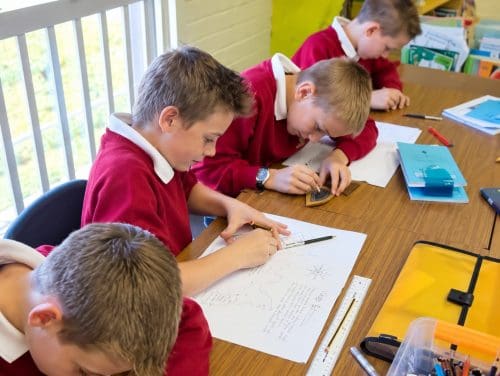
You were called an idiot if you did not fulfil your duties as a citizen. Year 5 pupils cast their votes to ostracise a corrupt Athenian politician
Making ostacons as a way of learning about democracy and getting familiar
with the Greek alphabet
Using unseen images of Greek vases to play Call My Bluff
Wall display to present arguments as to whether Athenian money should be spent on the Parthenon?
|