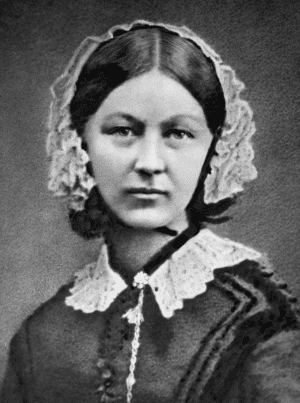
Fighting Fit. What did Florence do to improve the lives of the soldiers when she arrived in the Crimea?
One example of a series of lessons for teaching Florence Nightingale as part of your KS1 history. A sample from the full planner in the medium term planning section for teaching this topic is included in the downloadable resource section below.
In this particular lesson KS1 children compare the appalling conditions in the hospitals on Florence’s arrival at Scutari. With the help of animated rats on the PowerPoint presentation!! They list the most significant problems and then compare with a hospital which had been transformed by Florence. They annotate a famous painting and then write a letter from Florence explaining the sort of changes she introduced, using a model of one Y2 pupil’s previous work.
Learning objectives
- Children understand the main problems with the treatment of soldiers prior to Florence Nightingale’s arrival
- They can then identify the changes Florence made by comparing two paintings
- They understand that the changes were made very quickly and brought about important improvements in survival
- They can demonstrate their understanding by composing a letter, written by Florence
Step 1
Start by explaining that Florence had a tough job to do when she arrived. The rooms where the injured soldiers were put was nothing like hospitals today. Project the image on slide. Ask the children to work in pairs to see if they can find 3 things that Florence would want to make better.
Step 2
Now click on the PowerPoint slide 2 to add a few more ideas. Slide 3 then extends their knowledge by referring to comments that Florence herself made.
Step 3
Now for the main task. Pupils are shown slide 4, an animated labelling of the key improvements. At first a coloured shape appears. Pupils should guess what improvement this represents. A confirming label then emphasises each point.
Step 4
To check that pupils can apply this understanding to an unfamiliar image, project slide 5 and ask children to annotate each labelled feature. It would be helpful if they had a copy of slide 5.
Differentiation. For those pupils who need more support for this task, you could ask them to simply match the numbered labelled features with the labels on slide 6. This slide could also be used to check that all pupils have the right answers.
Step 5
The lesson finishes by asking pupils to imagine a letter Florence might have sent in order to make the improvements they have seen. This offers scope for pupils’ creativity, and links with literacy, but it will be challenging for some. Model the task by using an example of a Y2 pupil’s work, provided on slide 7. You will need to go over the conventions of letter writing. This will help pupils to think of time and place as well as the actions Florence needed to take.