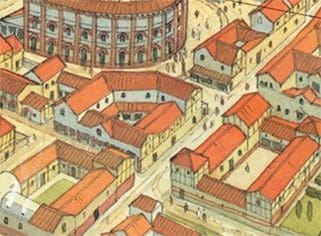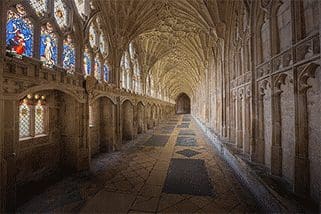
Gloucester is one of England’s oldest cities, with a history shaped by Roman settlement, religious importance, and strategic location. Founded by the Romans as Glevum in the first century AD, it later became a colonia for retired soldiers, establishing Gloucester as an important administrative centre. During the Anglo-Saxon and medieval periods, Gloucester grew in significance as a centre of royal power, trade, and religion. Gloucester Cathedral became one of the city’s most important landmarks, reflecting its role in medieval Christianity and pilgrimage. The city’s position on the River Severn allowed it to develop as a port, trading goods between Wales, the Midlands, and southern England.
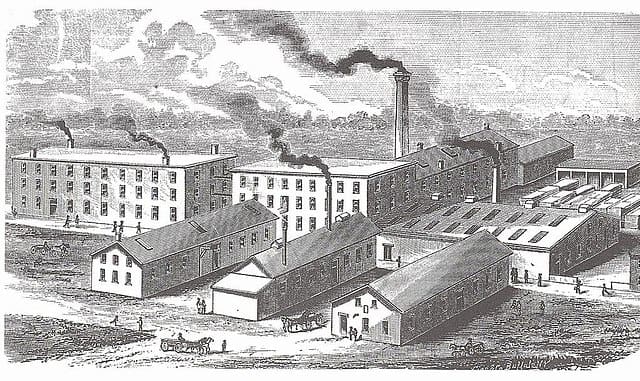
Gloucester also played a notable role in national conflicts, including the English Civil War. In later centuries, the city developed light industry, docklands, and transport links. Today, Gloucester’s Roman remains, cathedral, docks, and historic streets reveal a city shaped by nearly two thousand years of