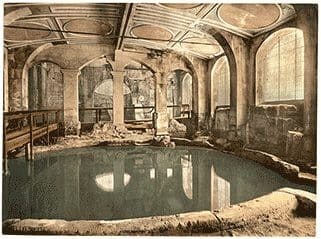
Bath’s identity has been shaped by hot springs, architecture, and centuries of visitors. Its story begins in the Roman period, when a major bathing and temple complex was developed around the natural springs at Aquae Sulis in the AD 60s, linking Roman culture with the local cult of Sulis Minerva. So nesting a local study within the Roman Britain unit makes best sense. In the Middle Ages, Bath remained an important religious centre, and later became one of Britain’s most fashionable spa towns.
The eighteenth century brought dramatic transformation: elegant Georgian planning and buildings—such as the Royal Crescent (built 1767–1775)—helped create an internationally recognised cityscape. As there is no national Curriculum unit on the Georgian period, the local study focusing on this period helps complete pupils’ mental map of the past. otherise pupils might not study any British history from the Norman invasion until the present day!!
Bath’s heritage also