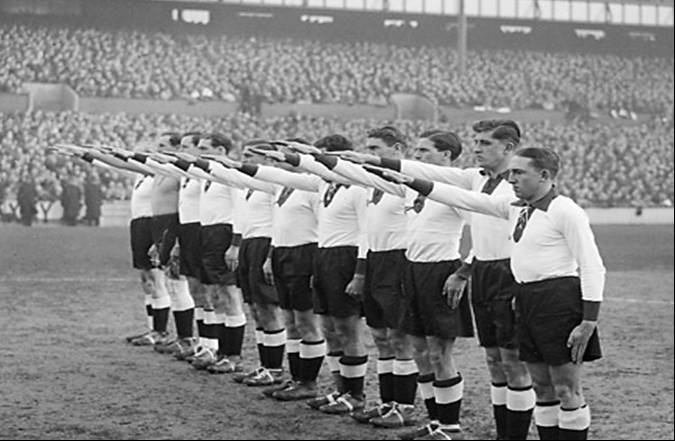
If you have ever found it difficult to motivate boys looking at the Inter-war years from 1919-39, why not try using football to tell the story. This quick activity, supported by a fully illustrated PowerPoint (with photos and video clips), uses football to mark out some of the key events of the inter-war years and touches on the following points:

  1. Germany’s diplomatic isolation in the early 1920s (she was not invited to attend the 1902 or 1924 Olympics and the FA did not arrange any football fixtures).
  2. Germany’s coming in from the cold during the Streseman Years. (in 1928 she was invited to participate in the Olympics)
  3. Germany was accepted by the Allies (The first full international between England and Germany since the war took place in 1930. It was a draw)
  4. The return fixture, scheduled for 1935, was greeted with considerable opposition, not least by protests from Jewish organisations ( England won 3-0)
  5. The next match was fixed in November 1937 to take place in May 1938. This was 2 months after Anschluss!
  6. At the May 1938 match English players had to give the Nazi salute to Goebbels, Goering, Hess, Ribbentrop (Hitler was not present). British were frightened of antagonising the Nazi regime. The German team contained former Austrian players, following Anschluss. (England won 6-3!)
  7. The return match was scheduled for 1939-40 and never happened, nor did the fictional one in Escape to Victory!! The next match was actually in 1954 and England won again 3-1. (Stanley Matthews played in this match as he had done so brilliantly in 1938!)

You might want to put the presentation on your VLE or intranet so that selected students could access it at different times to normal lessons. A similar approach can be taken to looking at key 20th century developments through the device of the Olympic games.

Resources

acrobat Looking at international relations 1919-39.  Using football to clarify themes

acrobat logo

Lesson or enquiryHistorical focus
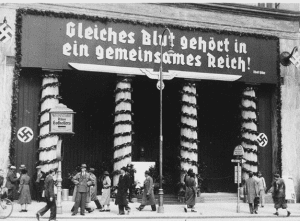
How can we explain the incredible margin of victory at the referendum for Anschluss in 1938?Explaining the Anschluss referendum result
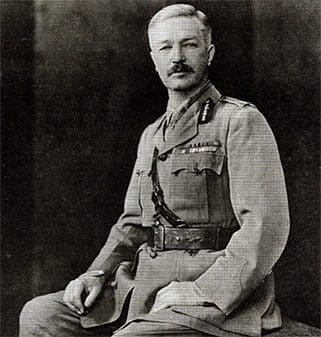
Rotten apple or…? How should we portray Dyer’s motivation in the Amritsar massacre?Motivation, empire and interpretations
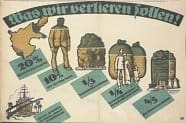
How should Germany be treated at the Paris peace conference?Peacemaking after World War One
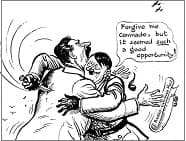
Which cartoon best explains the paradox of the Nazi-Soviet Pact?Cartoon analysis and the Nazi-Soviet Pact
Why is it so difficult to work out who caused the First World War?Causation and problems of evidence
How well do these cartoons cover the causes of World War One?Cartoon analysis and causation
When Italy signed two peace treaties with Abyssinia just seven years before, why did Mussolini invade in 1935?Building explanations of the Abyssinian invasion
Why did Germany lose the Battle of Britain?Explaining Germany’s defeat
The causes of World War One: The Blame GameCausation and responsibility for war
Who said what at Versailles? A competitive team game with a serious purposeAims and viewpoints at Versailles
At what stage was it obvious that the League of Nations would fail to keep peace?Evaluating the League’s decline
Could the Treaty of Versailles be justified at the time?Evaluating the peace settlement
Was it the Manchurian or the Abyssinian crisis that spelled the end of the League of Nations?Comparing the impact of international crises
Why did the League of Nations fail?Explaining the League’s failure
Invasion of the Rhineland, 1936: a study in political cartoon analysisInterpreting political cartoons
Explaining why there were so many casualties on the first day of the Battle of the SommeExplaining the losses on 1 July 1916
Why are these accounts of the Battle of the Somme, written by the same person, so different?Source evaluation and contrasting accounts
Using the history of football to explore inter-war relations, 1919–1939Football and international relations
Share