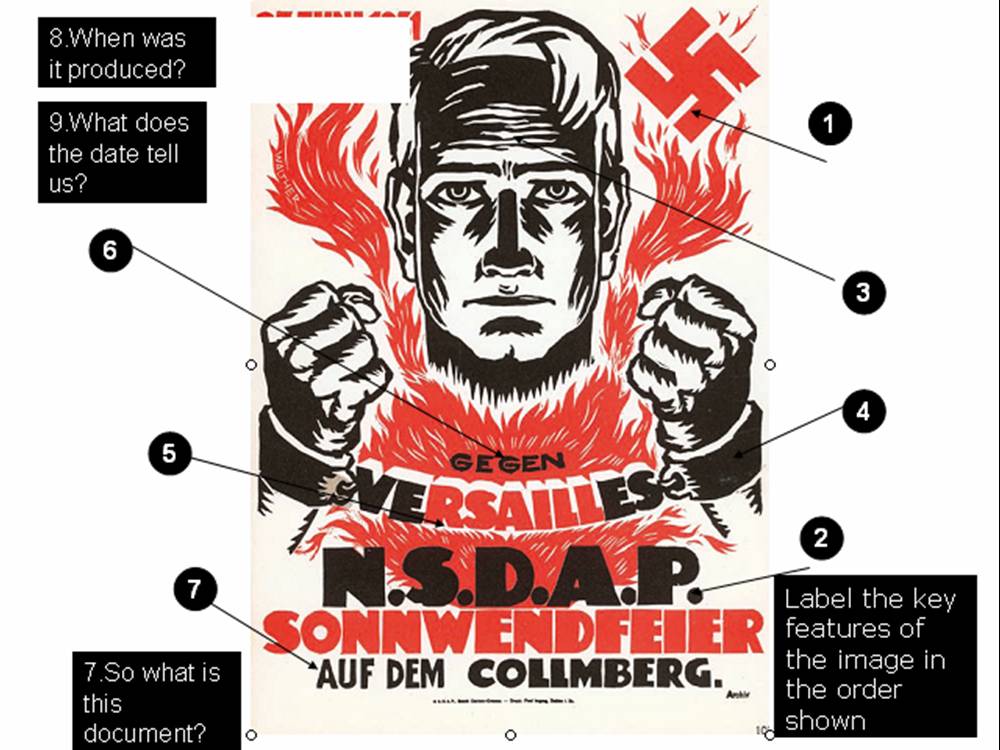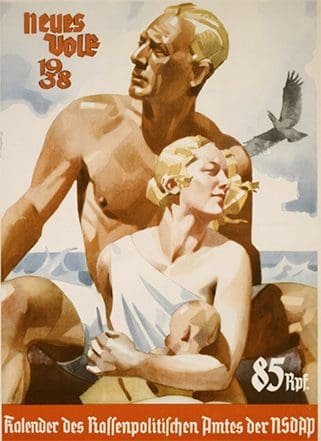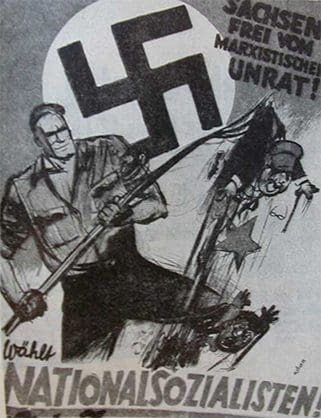
This simple task engages students in thinking for themselves why people voted for Hitler in the 1930s. It uses the simple but visually appealing medium of election posters. Students work in teams of three to see if they can be the first to find 6 different aspects Nazis were focusing on to appeal to the electorate.
To make it more fun the task is slightly competitive. Students work in groups of 3, but they have to whisper so as not to be overheard. After a brief introduction explaining why posters are useful evidence, they are shown the slide show (Resource 1) of 10 different posters. As the posters are displayed, students have to work out what the Nazis are trying to focus on. When they have seen all 10 images they have to find 6 different foci. They get 3 marks for each correct answer arrived at without any help. They get 2 marks for each if they can work it out with the help of a translation of the words on the poster, and 1 mark if they are partially correct.
It will be more fun if this is done against the clock. If you have the written clues available at the front, 1 person from each group can buy a clue, but it will cost them 1 point. First team to get to 15 points wins. Most students will take the scores seriously but what matters most is how you tie together the key messages behind the posters. By making it fun and competitive in this way it is more likely to engage some of your more reluctant learners.
To consolidate the learning ask ten students to volunteer to explain one of the posters to the rest of the class with the aid of the translation you give them. Let them chose which they opt for so that there will be some in-built differentiation. Have the image projected as the students explain it.
You then bring it all together by explaining how the images on the posters tell us who Hitler was aiming his propaganda at, but that we need to examine other sources too before we can be sure of our judgements.
Resources
©All images are copyright but can be obtained from the German propaganda Archive