| Teaching Germany 1919–1945 | Overview and planning |
| Was the Weimar Republic doomed from the start? A glass half empty? | Evaluating Weimar’s prospects |
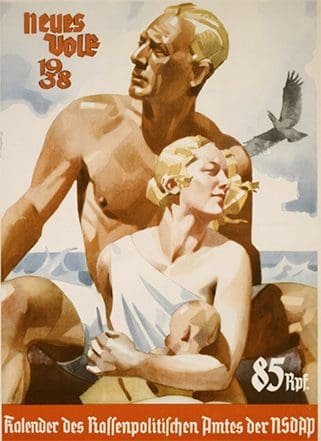
| How successful was Nazi policy towards women and families? | Evaluating Nazi social policies |
| Why was Hitler able to consolidate his position in power between January 1933 and August 1934? | Explaining the consolidation of dictatorship |
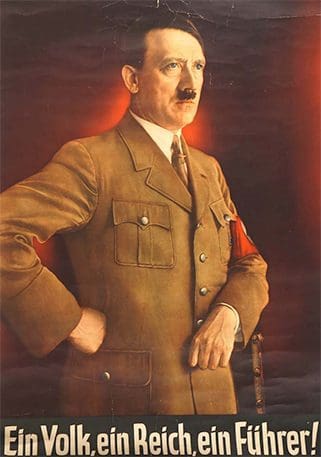
| Hitler’s propaganda: the cult of leader – reading internal clues | Analysing Nazi propaganda |
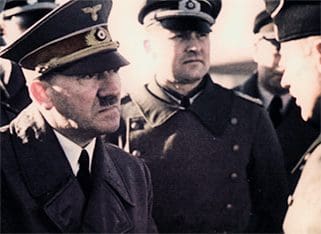
| Why did Germany lose the Battle of Britain? | Explaining Germany’s defeat |
| Market place: why I didn’t oppose Hitler | Explaining the lack of opposition |
| Why was Röhm murdered? | The Night of the Long Knives |
| Treaty of Versailles: could it possibly be to blame for the Weimar Republic’s defeat nearly 14 years later? | Assessing the treaty’s longer-term impact |
| Weighing up the evidence for who caused the Reichstag Fire | Evaluating evidence and explanations |
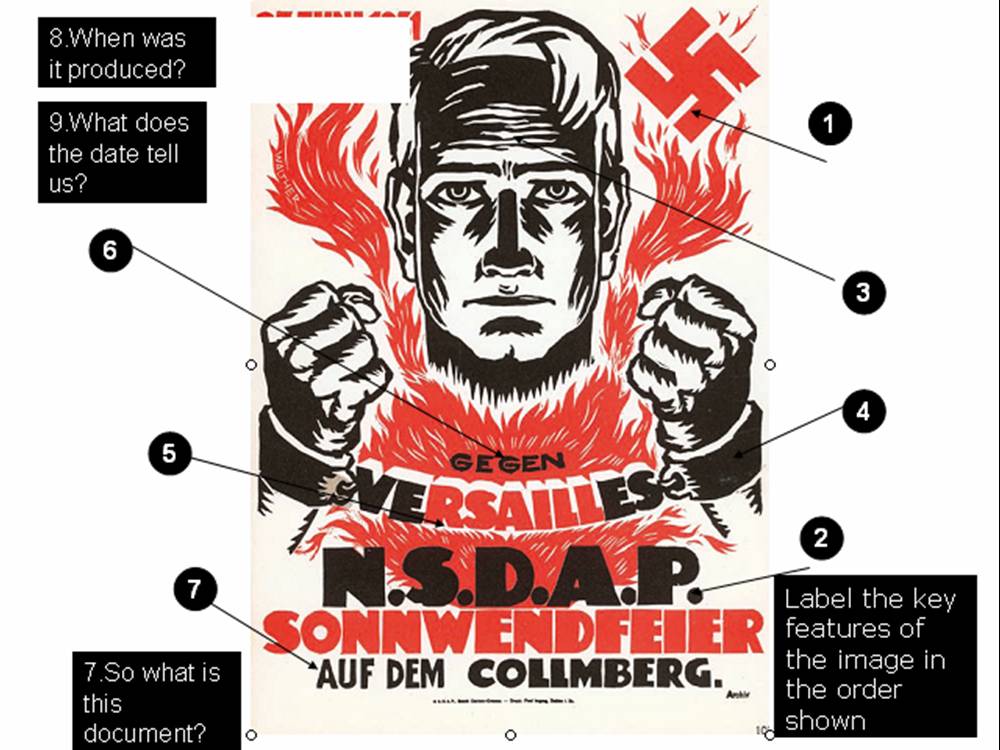
| Working out what the election posters tell us about who voted Nazi | Election posters and Nazi support |
| Germany 1920–1923: problems facing Weimar | Challenges to the Weimar Republic |
| Was Leni Riefenstahl’s ‘Triumph of the Will’ a documentary or propaganda? | Evaluating film as a source |
| What were the main threats facing the Weimar Republic? | Identifying and weighing threats |
| How much did the Gestapo really control people’s lives in Hitler’s Germany? | Terror, control and everyday life |
| Did all Germans benefit equally from life under the Nazi regime, 1933–1945? | Diversity of experience under Nazism |
| Battalion 101: why did they shoot? A history mystery | Investigating perpetrators’ actions in the Holocaust |
| Germany 1933–1934: revision quickie | Revising the consolidation of Nazi power |