
KS2 History Resources, Lessons and Planning
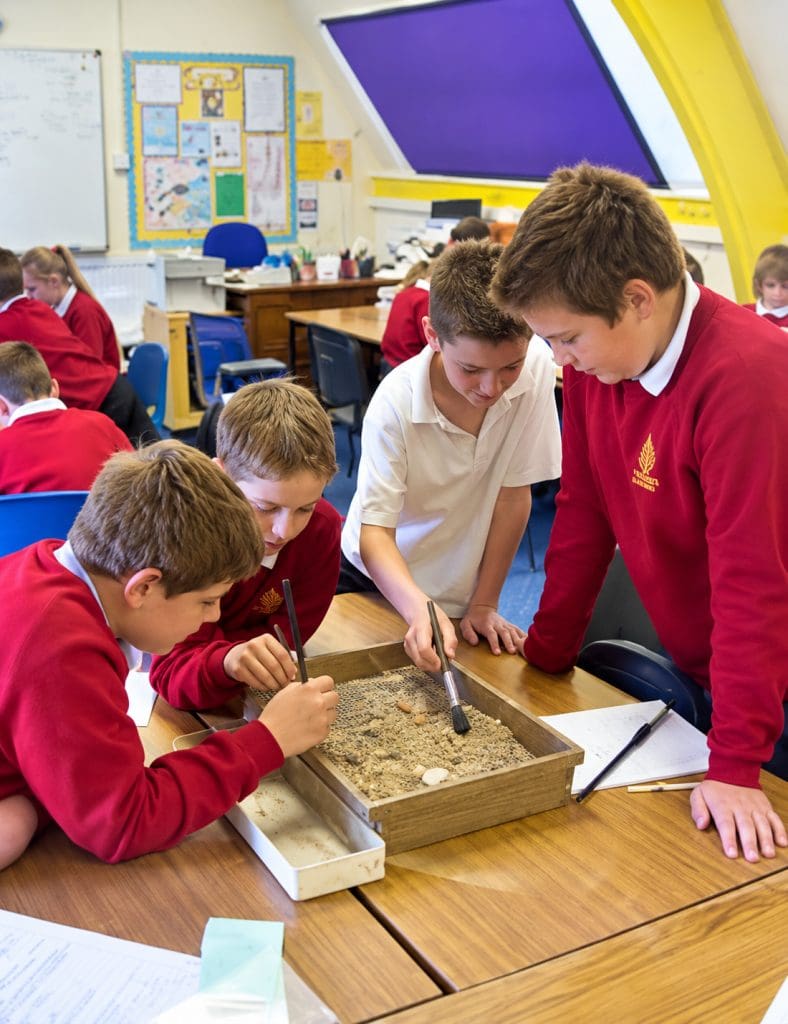 Expert-created KS2 history resources for Years 3–6, including complete lesson plans, PowerPoints, medium-term plans, assessment tasks, quizzes and knowledge organisers.
You will be helped to design and plan an exciting primary history curriculum , taking into account the difficult areas of assessment and progression and mindful of the new focus on curriculum within OFSTED’s framework. You will see how our enquiry-led approach, structured around a limited number of expertly-chosen key questions enables you to blend substantive and disciplinary knowledge. The interplay between the two is essential for great history learning. One without the other is of very limited value in building historical thinking.
It has been a decade since the last major curriculum review. In that time we have seen masses of superb practice which we are sharing with you. There are minor changes, principally around local history and diversity, for the 2028 curriculum which will be published in Spring 2027.
You will be shown which skills and concepts are best developed in which contexts along with examples of key questions that have proved most effective in deepening learning. You also will be helped to make the most of history’s contribution to the whole curriculum by being shown cutting edge practice in the areas of cross-curricular history planning, literacy, thinking skills and creativity.
The site also offers a unique set of detailed lesson plans and resources for about 150 lessons which have been judged as outstanding by OFSTED. These cover all the major topics linked to an outstanding medium-term planner which expertly shows how to combine the most significant content with the development of conceptual understanding.
You will see below that these resources are constantly being added to , thereby ensuring that you have not only the latest and best advise but also the highest quality learning materials for your pupils.
| KS2 History Topic | Resources include |
|---|---|
| Ancient Egypt KS2 | Lesson plans, PowerPoints, scheme of work, assessment, quiz and knowledge organiser |
| Ancient Greece KS2 | Ancient Greece lessons, enquiries, planning, assessment and knowledge organiser |
| Anglo-Saxons KS2 | Anglo-Saxon Britain lessons, enquiries, planning, assessment and resources |
| Benin KS2 | Benin Kingdom lessons, key enquiries, planner, assessment and knowledge organiser |
| Beyond Face Value KS2 | Thematic history enquiries exploring evidence, interpretation and history beyond 1066 |
| Black & British History KS2 | Black British history lessons, historical enquiries, significant individuals and thematic studies |
| Crime & Punishment KS2 | Thematic Crime and Punishment lessons, chronology, change and continuity and enquiry activities |
| Early Islamic Civilisation KS2 | Baghdad and the Golden Age of Islam lessons, planning, assessment and resources |
| Keeping Healthy Through Time KS2 | Thematic health and medicine enquiries exploring change, continuity and developments over time |
| Local History KS2 | Local history study guidance, enquiries, case studies and curriculum planning ideas |
| Maya Civilisation KS2 | Maya civilisation lessons, planner, enquiries, assessment, quiz and resources |
| Romans KS2 | Roman Britain and Roman Empire lessons, planning, PowerPoints, assessment and resources |
| Shang Dynasty KS2 | Shang Dynasty lessons, historical evidence, enquiries and ancient civilisation resources |
| Stone Age to Iron Age KS2 | Prehistoric Britain lessons, scheme of work, assessment, quiz and knowledge organiser |
| Tudor Britain KS2 | Tudor history lessons, enquiry activities, PowerPoints, planning and assessment resources |
| Victorian Britain KS2 | Victorian Britain lessons, source enquiries, planning, PowerPoints and assessment activities |
| Vikings KS2 | Viking Britain lessons, planner, quiz, assessment and knowledge organiser |
| World War Two KS2 | WW2 lessons, Home Front enquiries, propaganda, assessment, planner and knowledge organiser |
Benin knowledge organiser – KS2
Benin was a very important civilization, not just within Africa but in world history too. An important part of what you’ll learn is a comparison with Benin offers a good…
Read More
Teaching interpretations – top 10 key messages
In a recent article in the Historical Association’s Primary History publication the ever-reliable Tim Lomas attempted to identify the top 10 key messages to bear in mind when teaching the…
Read More
Vikings knowledge organiser – KS2
Probably one of the most captivating of KS2 history topics, the Vikings present wonderful opportunities to capitalise on pupils’ fascination and to do some in-depth work on using sources and…
Read More
Anglo-Saxons knowledge organiser – KS2
During this period England emerged as a recognisable nation and Christianity became established. The recent coronation of Charles III is the latest for a king of England: over a thousand…
Read More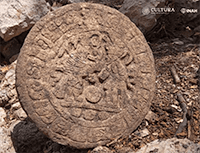
Keeping up to-date with teaching of the Maya – Archaeologists uncover scoreboard for ancient Maya ball game
In the Archaeological Zone of Chichén Itzá, archaeologists from the National Institute of Anthropology and History (INAH) have discovered a circular shaped stone marker they believe to be a scoreboard…
Read More
Golden threads or Gordian knot? How to weave first order historical concepts into the fabric of your history curriculum
Talking about ‘first-order’ historical concepts, by which I mean ideas such as empire and invasion, civilization, power and authority has always been a central part of the discourse surrounding school…
Read More
Policy and vision in Key Stage 2 history
Having seen so many Key Stage 2 history policies that nobody on the staff ever refers to, it seemed pretty futile to add to the list! Policies are such personal…
Read More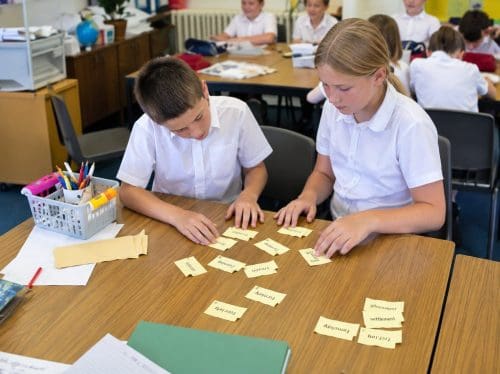
Keeping up-to-date with developments in primary history
Every few years, the Primary wing of the Historical Association carry out a survey of primary schools to see what the current picture of history teaching and provision looks like….
Read More
Adapting Keystage history lessons – FAQs
1. Why are lessons still called ‘outstanding’? I am often asked how the lessons section of the site should be used and why the term outstanding is still used when…
Read More
Ancient Greece knowledge organiser – KS2
In your study of Ancient Greece you will learn how a civilization that flourished over 2500 years ago still influences our lives today. Even the Olympic games come from this…
Read More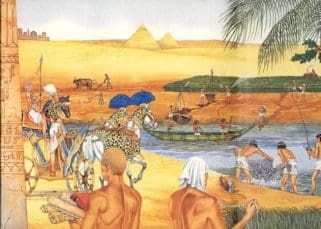
Grasping the chronology nettle
Everyone knows that chronology is one of the key historical concepts pupils need to learn, and yet in very few schools is it given serious attention. Unless the subject leader…
Read More
Running timebox – First and foremost
Why Timebox teams? First and foremost, Timebox Teams should be fun. Behind the serious intent of improving pupils’ chronological knowledge lies the belief that constant repetition and familiarity with images…
Read More
Timebox – KS2 Pack
Mention the teaching of chronology to most infant teachers and their eyes glaze over. Their experience is that it is like picking up mercury with a fork. One minute the…
Read More
Roman Britain knowledge organiser – KS2
The arrival of the Romans to Britain and their occupation for over 350 years marks a turning point in the history of Britain. Not only did they transform the landscape…
Read More
Stone Age to Iron Age knowledge organiser – KS2
The earliest known humans arrived in these lands around 900,000 years ago. During this time there were huge changes: the ice covering Britain melted; instead of hunting all the time,…
Read More
Building vocabulary to help pupils’ historical understanding. My 100 top KS2 words
Word lists are all very well but do we carefully plan when words are acquired and then applied in a more sophisticated way across the key stage? It is often…
Read More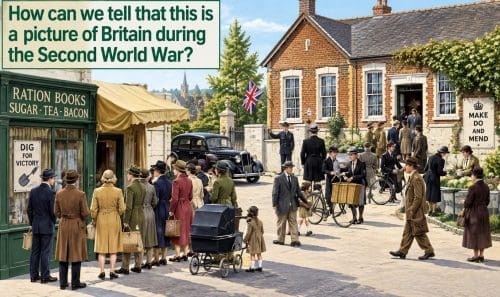
Common assessment tasks in history at Key Stage 2
Many colleagues who have been sceptical about assessing history at Key Stage 2 have been won over by this simple approach which aims to give good diagnostic feedback to you…
Read More
Assessment for learning in Primary history
Assessment for Learning is much-vaunted and many-faceted. If we break down what it means in its constituent parts, many of you will feel that you do most of that already,…
Read More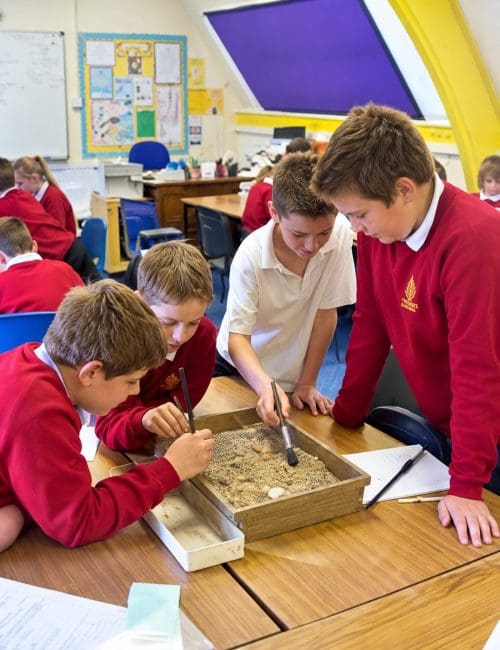
Principles of good assessment in history at Key Stage 2
As OFSTED reports have pointed out for many years, assessment in history is not strong in most schools and the situation is not really improving. Part of the problem has…
Read More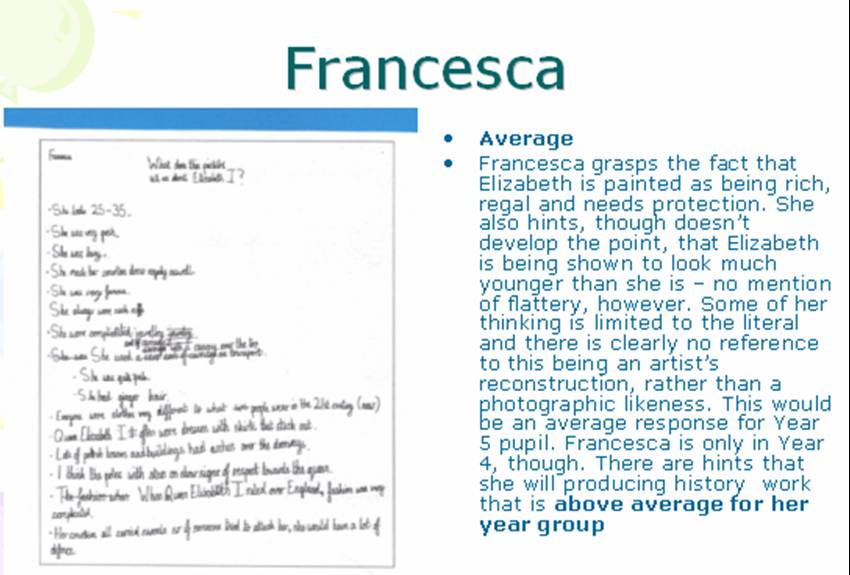
Judging pupils’ work at Key Stage 2
Teachers’ failure to carry out any useful diagnostic, formative or summative assessment in history at Key Stage 2 has come under heavy criticism in all recent OFSTED reports. So we…
Read MoreTarget setting in history at Key Stage 2
With the emphasis that the Primary Strategy places on Assessment for Learning and the sharing of objectives, it would seem that target setting might be the natural next step. Whilst…
Read MoreGeneral advice regarding progression in history at Key Stage 2
A definitive paper explaining exactly what I think you should be doing in the realms of progression to help ensure that pupils get better at history in a planned way…
Read MoreProgression by strand in history at KS2: a key element of deep dives
One of the most important tasks that a history subject leader carries out is that of helping colleagues to build progression into pupils’ learning. With Key Stage 2 being the…
Read MoreEverything you wanted to know about progression in history at KS2 but couldn’t find anywhere!
Progression in history at KS2: part of your preparation for an OFSTED history deep dive Planning for progression in history is difficult, very difficult. You will be hard pressed to…
Read More10 places to go to find out about your local area
1. Go to your library Your local library will nearly always have a local history section that can tell you about the area in which you live over time. Although…
Read More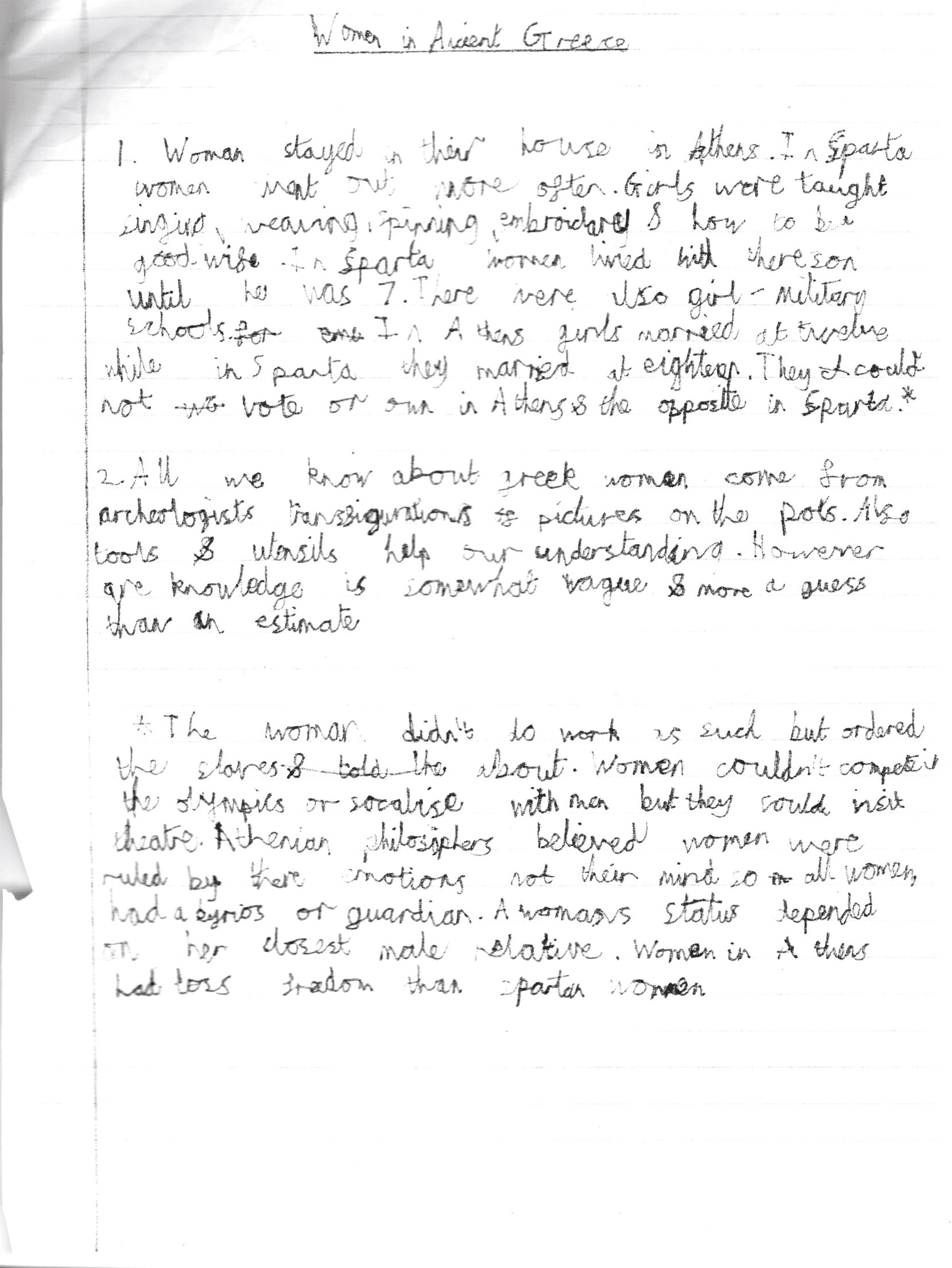
A pupil response to KS2 assessment task on women in Ancient Greece
Karl is in Y5 and has been taught in a school where standards are high but progress is slightly below national expectations for the cohort. It appears as if Karl…
Read MoreTaking on history leadership: doing the right things – 10 key steps
Taking on subject leadership can be a daunting prospect, especially if it is your first. When there is so much to do, and so many calls on your limited time,…
Read More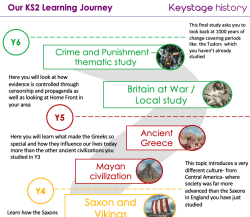
KS2 – Sharing the history learning journey with your pupils
An important part of planning your KS2 curriculum is being able to share the rationale with pupils and parents. So often the order in which history topics, (beyond chronological order…
Read More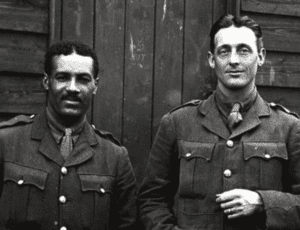
8 ways of improving the BAME dimension of your primary history curriculum
Bound as we all are,and not just as teachers, by the Equality Act, (not to mention our public sector duty), we need to do all we can to advance equality…
Read More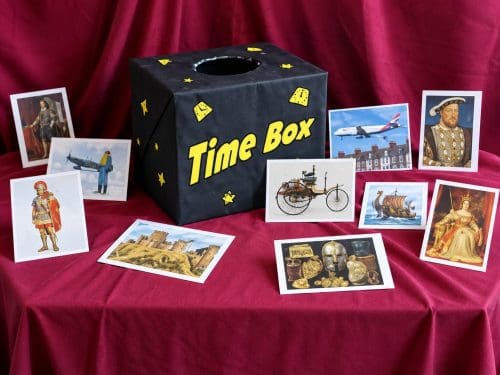
′100′ great ideas for teaching history at KS2
This section describes the best of the imaginative ideas I have seen work successfully in the teaching of history at Key Stage 2. The figure’100′ is in inverted commas because…
Read More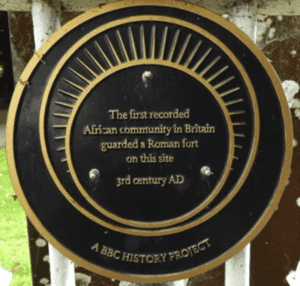
Black and British – KQ1 – How shall we tell the story of the first Black Britons in Britain?
Pupils watch a brief introductory video for just 70 seconds, the point at which the film stops short of identifying all the evidence for existence of Black people in Britain…
Read More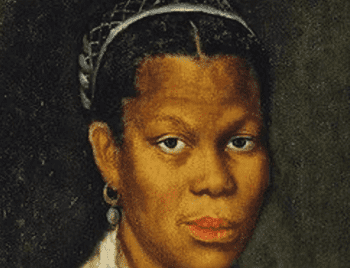
Black and British – KQ2 – What part did Black people play in British life when they started to settle 500 years ago?
Focusing on four key documents, pupils have to work out what we can say about the role of Black people in Tudor society. They make inferences from visual evidence and…
Read More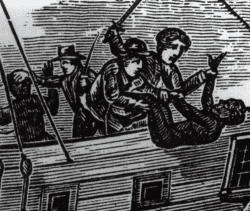
Black and British – KQ3 – What difference did the slave trade make to the experience of the Black people?
Having understood the nature of the transatlantic slave trade, and Britain’s role within it, pupils work in expert groups to interpret 18th century portraits and the light they shed on…
Read MoreBlack and British – KQ4 – When so many Black people rushed to fight in the two world wars, why then is it only recently that their sacrifice has been properly recognised?
When so many Black people rushed to fight in the two world wars, why then is it only recently that their sacrifice has been properly recognised? The stories of Walter,…
Read More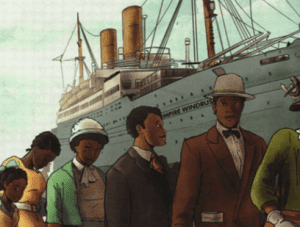
Black and British – KQ5 – How did the arrival of the Empire Windrush change the way Black People were treated in Britain?
In this enquiry, pupils explore the experiences of the Windrush generation and consider how their arrival changed the story of Black people in Britain. They investigate why people came to…
Read More
Black and British – KQ6 – How far has life improved for Black people living in Britain in the last 60 years?
This active session asks pupils to create a physical fortunes graph to show the effects that changes in the law and people’s reactions had on the lives of Black people…
Read MoreWhat would your pupils say about getting better at history, when they leave your school?
Recently two university education departments carried out a broad-sweep survey of primary pupils’ experience of history at KS1 and 2 and asked specifically: “What does it mean to get better…
Read More
6 signs to look for to show your pupils are becoming historically literate
1. Understanding how it is possible to know about the past Pupils show an understanding of how it is possible to know about the past, even though there is no…
Read MoreIt’s time to think about the teaching of time at KS1 and 2
Time is probably the concept most fundamental to understanding history. This presents problems, of course, particularly with the youngest children. But just because its a slippery concept doesn’t mean we…
Read More
Scales of planning in primary history
Making sure you don’t leave out key things and don’t waste your time duplicating Planning can seem a real chore, but it is key not only to maximising the opportunities…
Read More
5 key tasks for the history subject leader
Being a history subject leader can often be daunting, especially if you have received very little training and have no avowed expertise in this area. It can also be overwhelming…
Read More10 top dos and don’ts of using knowledge organisers in primary history
Used well, knowledge organisers are a really powerful resource but it all depends on how they are used. However attractive and packed with facts it might appear, if it just…
Read MoreTop 10 things your KS2 pupils need to know – Early Islamic civilization
Top 10 things your KS2 pupils need to know, and remember, about Early Islamic civilization 1. 1000 years of extraordinary activity after AD 700 For approximately 1000 years, after AD…
Read MoreTop 10 things your pupils need to know – Roman Britain
Top 10 things your pupils need to know about Roman Britain 1. Roman Britain was part of a huge empire ruled from Rome Roman Britain was part of a huge…
Read More
I’m a new subject leader. How do I know if pupils are making the progress they should in history?
Getting a handle on progression is complicated. There are lots of superficially appealing lists of competencies that link to each age group each produced by commercial companies who have not…
Read More7 searching questions for you to ask about your KS2 history curriculum
Every now and then it is worth just ensuring that your KS2 history curriculum is as robust as it should be. There is no more important task for the history…
Read MoreWhat should my Y6 pupils be able to do in history? The Big 5
By the end of Year 6, it is important that pupils not only build up good chronological knowledge, they also need to be able to make comparisons across time between…
Read More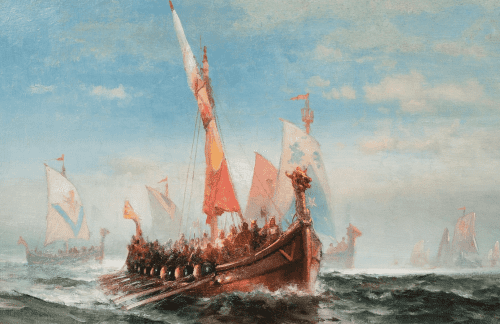
KS2 Example Planner – Vikings Medium Term Planner
Here is a typical example of a medium term plan which exist for all main KS2 topics, in line with the most recent history National Curriculum. You will notice that…
Read More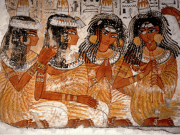
Ancient Egypt : a new Pompeii?
A few weeks ago, Egyptian archaeologists the discovery of a “lost city” of the pharaohs dating back some 3,400 years that they described as the biggest ancient settlement yet uncovered…
Read More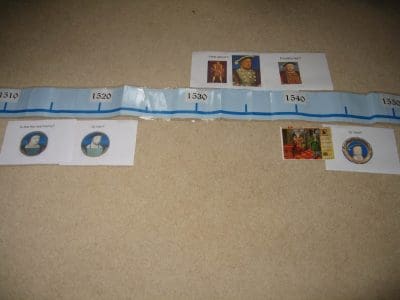
Beyond Face Value – KQ1 – Henry VIII a question of interpretations. Could you spot Henry VIII in a police line-up?
This is a really fun lesson which shows children what is meant by historical interpretations in an engaging and accessible way. It appeals to both visual and kinaesthetic learners by…
Read MoreWritten by Neil Thompson

All content on Keystage history is written and quality assured by Neil Thompson, a former history teacher, county history adviser and Ofsted inspector with more than 30 years’ experience in history education.