
KS2 History Resources, Lessons and Planning
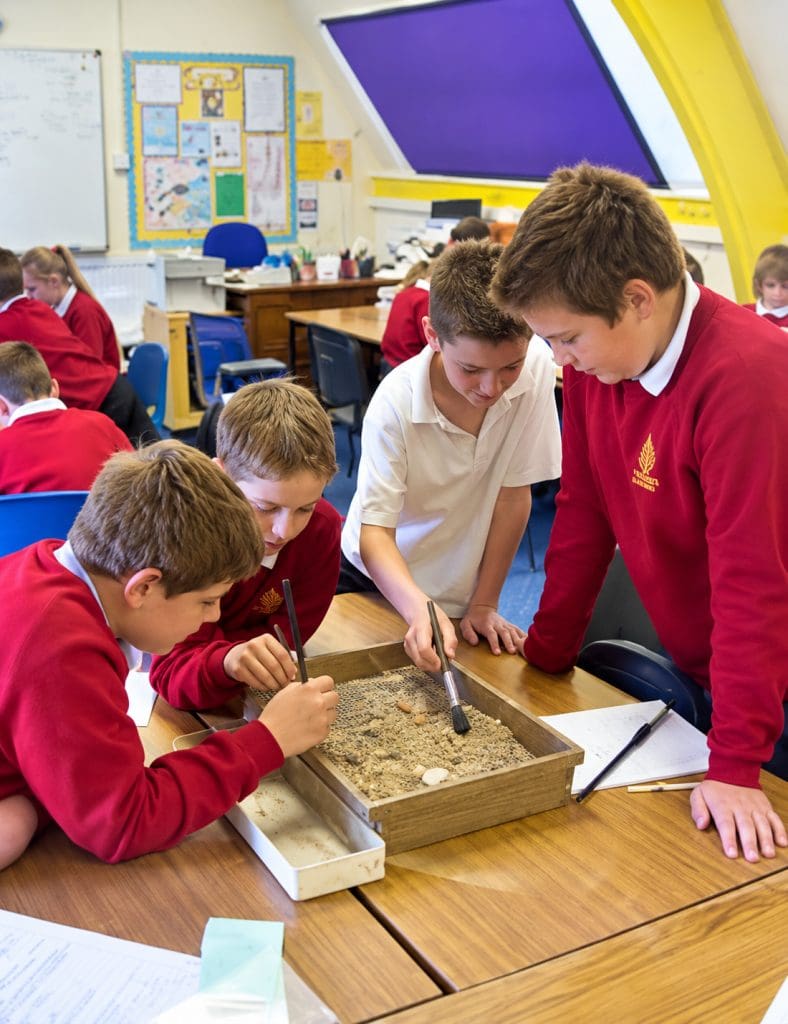 Expert-created KS2 history resources for Years 3–6, including complete lesson plans, PowerPoints, medium-term plans, assessment tasks, quizzes and knowledge organisers.
You will be helped to design and plan an exciting primary history curriculum , taking into account the difficult areas of assessment and progression and mindful of the new focus on curriculum within OFSTED’s framework. You will see how our enquiry-led approach, structured around a limited number of expertly-chosen key questions enables you to blend substantive and disciplinary knowledge. The interplay between the two is essential for great history learning. One without the other is of very limited value in building historical thinking.
It has been a decade since the last major curriculum review. In that time we have seen masses of superb practice which we are sharing with you. There are minor changes, principally around local history and diversity, for the 2028 curriculum which will be published in Spring 2027.
You will be shown which skills and concepts are best developed in which contexts along with examples of key questions that have proved most effective in deepening learning. You also will be helped to make the most of history’s contribution to the whole curriculum by being shown cutting edge practice in the areas of cross-curricular history planning, literacy, thinking skills and creativity.
The site also offers a unique set of detailed lesson plans and resources for about 150 lessons which have been judged as outstanding by OFSTED. These cover all the major topics linked to an outstanding medium-term planner which expertly shows how to combine the most significant content with the development of conceptual understanding.
You will see below that these resources are constantly being added to , thereby ensuring that you have not only the latest and best advise but also the highest quality learning materials for your pupils.
| KS2 History Topic | Resources include |
|---|---|
| Ancient Egypt KS2 | Lesson plans, PowerPoints, scheme of work, assessment, quiz and knowledge organiser |
| Ancient Greece KS2 | Ancient Greece lessons, enquiries, planning, assessment and knowledge organiser |
| Anglo-Saxons KS2 | Anglo-Saxon Britain lessons, enquiries, planning, assessment and resources |
| Benin KS2 | Benin Kingdom lessons, key enquiries, planner, assessment and knowledge organiser |
| Beyond Face Value KS2 | Thematic history enquiries exploring evidence, interpretation and history beyond 1066 |
| Black & British History KS2 | Black British history lessons, historical enquiries, significant individuals and thematic studies |
| Crime & Punishment KS2 | Thematic Crime and Punishment lessons, chronology, change and continuity and enquiry activities |
| Early Islamic Civilisation KS2 | Baghdad and the Golden Age of Islam lessons, planning, assessment and resources |
| Keeping Healthy Through Time KS2 | Thematic health and medicine enquiries exploring change, continuity and developments over time |
| Local History KS2 | Local history study guidance, enquiries, case studies and curriculum planning ideas |
| Maya Civilisation KS2 | Maya civilisation lessons, planner, enquiries, assessment, quiz and resources |
| Romans KS2 | Roman Britain and Roman Empire lessons, planning, PowerPoints, assessment and resources |
| Shang Dynasty KS2 | Shang Dynasty lessons, historical evidence, enquiries and ancient civilisation resources |
| Stone Age to Iron Age KS2 | Prehistoric Britain lessons, scheme of work, assessment, quiz and knowledge organiser |
| Tudor Britain KS2 | Tudor history lessons, enquiry activities, PowerPoints, planning and assessment resources |
| Victorian Britain KS2 | Victorian Britain lessons, source enquiries, planning, PowerPoints and assessment activities |
| Vikings KS2 | Viking Britain lessons, planner, quiz, assessment and knowledge organiser |
| World War Two KS2 | WW2 lessons, Home Front enquiries, propaganda, assessment, planner and knowledge organiser |
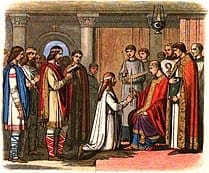
Keeping up to date with your teaching of Alfred the Great
The outstanding lesson on Alfred addresses the key question as to his greatness. Has it been exaggerated? You might like to know what the most recent scholarship is saying. Marc…
Read More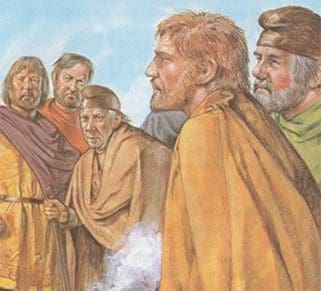
Anglo-Saxons – KQ6 – How effective was Anglo-Saxon justice?
Pupils work in groups to create a series of short dramatic enactments, each of which illustrates a way of keeping law and order / punishments meted out in Saxon times….
Read More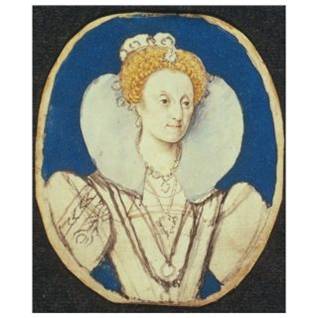
Life in Tudor Times – KQ4 – Elizabeth I portraits – why aren’t things what they seem?
This powerful lesson on Tudor portraits as propaganda gives pupils the chance to appreciate that things aren’t always what they seem. Elizabeth wanted to be shown in a particular light…
Read More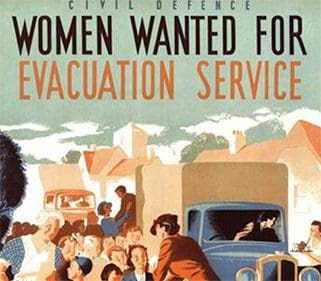
WW2 – KQ5 – Britain at war. The Home Front – Why is it so difficult to be sure what life was really like on the Home Front?
Why is it so difficult to be sure what life was really like on the Home Front? Two great tasks which together make up Key Question 5 of the Britain…
Read More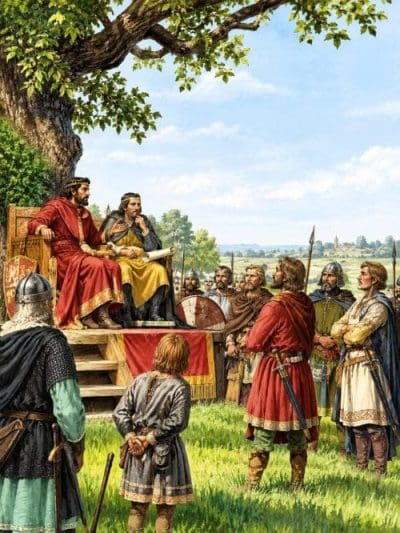
Anglo-Saxons – KQ7 – Were Saxon times really ‘Dark’ Ages?
Pupils design a two-sided paper plate on which they record the arguments used in the debate about the ‘Darkness’ of Saxon Britain. On one side they show the enlightened side…
Read More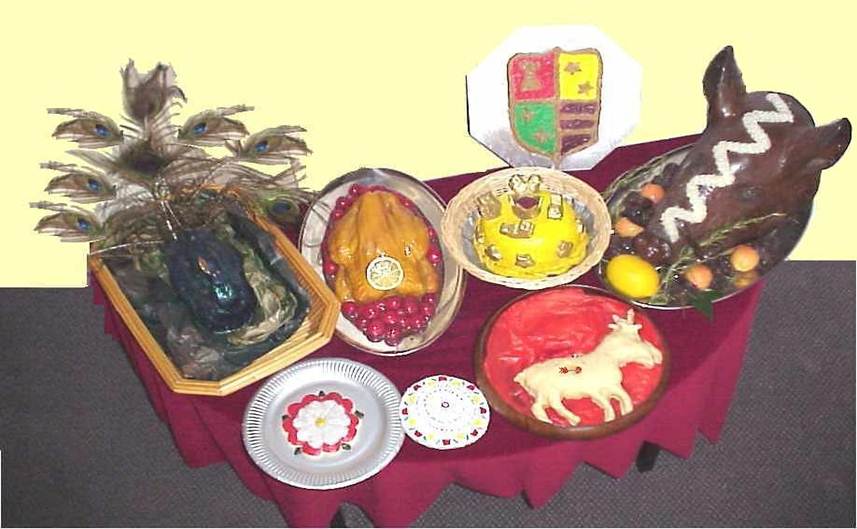
Life in Tudor Times – KQ4 part 2 – Get ready – the queen is coming!
This enquiry focuses on helping children to learn about the power and authority of Queen Elizabeth and to appreciate the contrasting lifestyles of rich and poor in late Tudor England….
Read More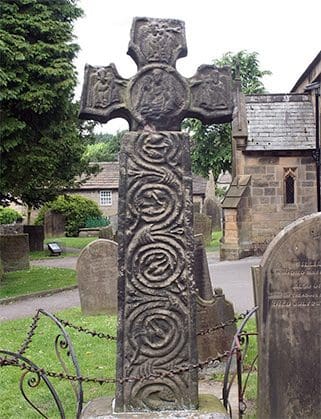
How well do you and your pupils understand the Anglo-Saxons? Diagnostic Smart Task
This short activity contains a number of statements about the Anglo-Saxons (RS1) which can be used diagnostically. Some are correct: some partially accurate; others downright wrong. But what will your…
Read More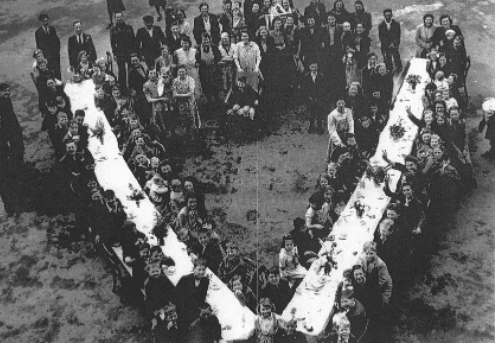
WW2 – KQ6 – What was VE day really like? Advising the film producer
In this really varied lesson pupils are asked to offer first-rate historical advice to a film producer who is about to make a new movie in which scenes from VE…
Read More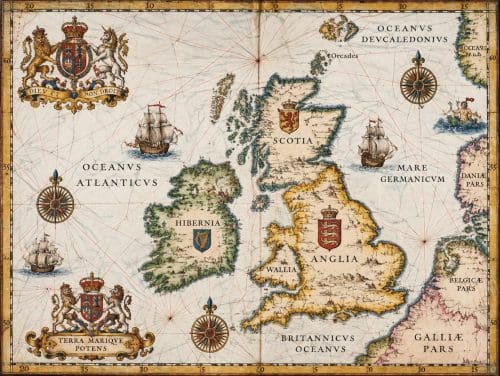
Life in Tudor Times – KQ5 – How was the Spanish Armada defeated by the smaller English fleet? Using a technique called Waiting room
This lesson works really well because the tension you build into the waiting room activity gets all the class involved and focused. The more able pupils have a specific, more…
Read More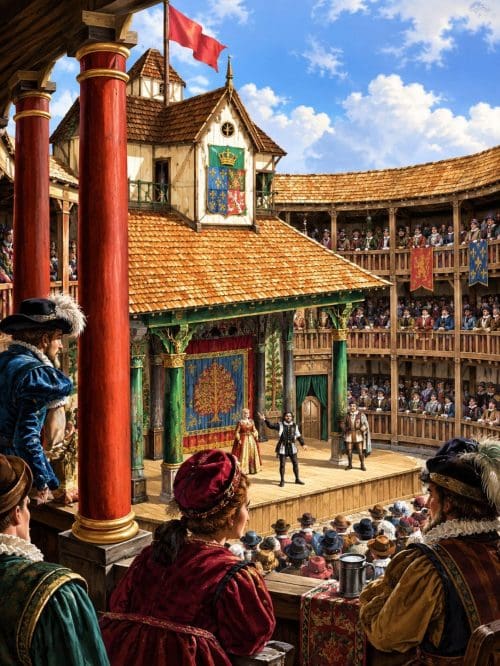
Life in Tudor Times – KQ6 – How did people enjoy themselves in Elizabethan England?
This KS2 enquiry comprises three outstanding activities: 6a. Advising the film director To imaginatively reconstruct the scene using a variety of evidence 6b. Prove it! Using a gallery of images…
Read More
10 things your pupils MUST know about the Anglo-Saxons
For many of you teaching the Anglo-Saxons will be something you are doing forte very first time. It is easy to get bogged down in a series of dates and…
Read More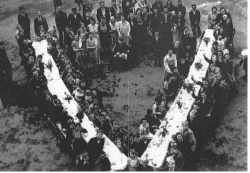
WW2 – KQ6 Background information – What was VE Day really like?
8 May 1945 – VE (Victory in Europe) Day – was one that remained long in the memory of all those who witnessed it. It meant an end to nearly…
Read More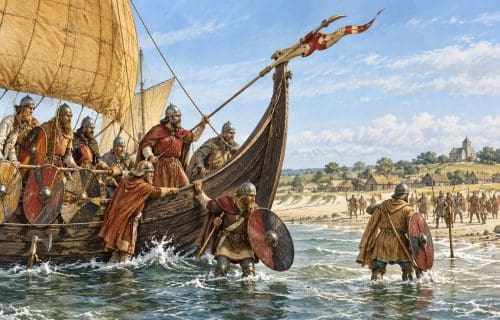
Roman Britain – KQ1 part 1 – From Caesar’s invasions to Claudius’ conquest
This first part of the first enquiry links to earlier work on the Iron Age and takes pupils from Julius Caesar’s two short-lived invasions through to anticipating Claudius’ invasion and…
Read More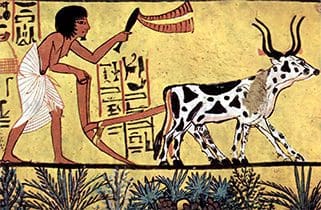
Ancient Egypt – KQ1 – Launching the Enquiry. So you think you know about Ancient Egypt?
What can we quickly add to what we already know about Ancient Egypt? This way of starting should build on what some pupils already know without slowing down the start….
Read More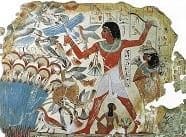
Ancient Egypt – KQ2 – How can we discover what Ancient Egypt was like over 5,000 years ago?
Pupils are invited to join an archaeological excavation, using slide 2-5 to set the scene. Before they can begin their preparations, they need to know where they are going (both…
Read More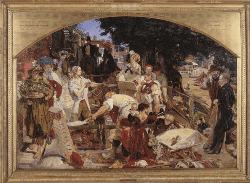
Beyond Face Value – KQ4 – Why did Ford Madox Brown paint this detailed picture of a scene that never existed?
This lesson revolves around a single painting entitled Work, painted by Ford Madox Brown between 1852 and 1865. Using Fastest Finger First pupils are encouraged to explore the full detail…
Read More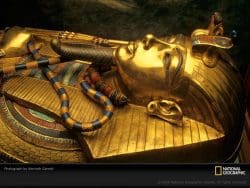
Ancient Egypt – KQ3 part 1 – The opening of Tutankhamun’s tomb
The opening of Tutankhamun’s tomb: a brilliant reconstruction relay The activity that forms the basis of this lesson is called reconstruction relay. It is GUARANTEED to enthuse even the most…
Read More
Roman Britain – KQ1 part 2 – Why did the Romans invade Britain?
This lesson uses a variety of approaches including role play, decision-making, card sorts, hot seating and completing speech bubbles. The focus is clearly on causation. It follows on from lessons…
Read More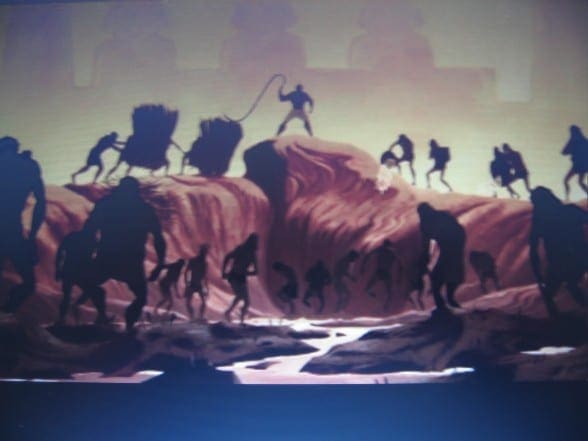
Ancient Egypt – KQ3 Part 2 – So who did build the pyramids? Did the Prince of Egypt film get it right?
This active lesson for Year 4 has been adapted from the one featured in the QCA Teacher Assessment Activities for history at Key Stage 2. It involves pupils seeking out…
Read More
Ancient Egypt – KQ4 Part 1 – What can an old clay model and a pair of old sandals tell us about life in Ancient Egypt 5,000 years ago?
What does the evidence tell us about the everyday life for men women and children? Here the focus is on two pieces of evidence which reveal a picture of the…
Read More
Ancient Egypt – KQ4 Part 2 – Using evidence of Life in Ancient Egypt KS2 – Pupils love playing history detectives
Crimewatch Ancient Egypt: Tomb Robbers This fun activity is a brilliant way of developing pupils’ deductive thinking skills in a realistic context. Pupils are cast in the role of police…
Read More
Ancient Egypt – KQ4 – Additional Smart Task
(NB This is not included on the planner) How can we learn so much about Ancient Egypt from just these 6 objects? After an initial stimulus ‘slow reveal’, pupils working…
Read More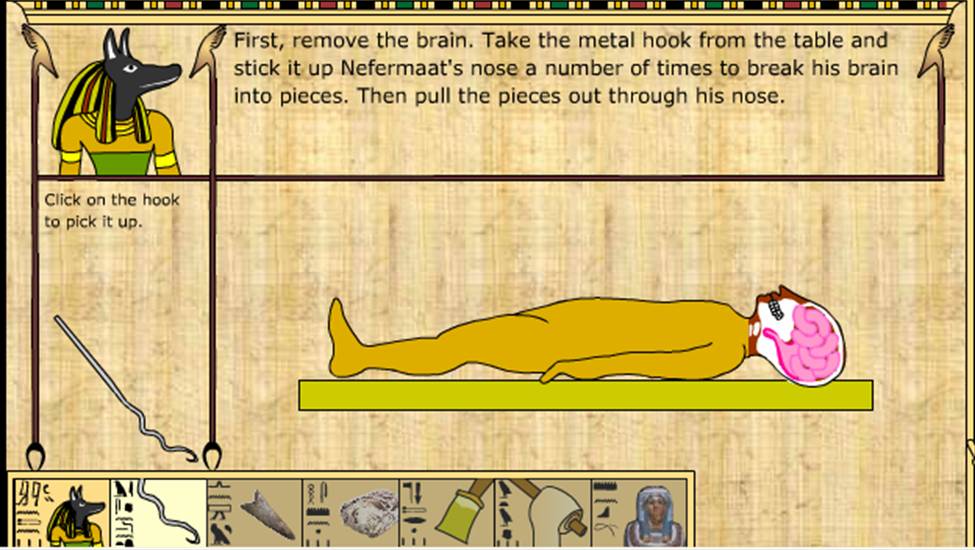
Ancient Egypt – KQ5 Part 1 – Embalming the dead in Ancient Egypt : Great history and great literacy too
Helping the Hopeless Embalmer This really fun lesson, in the style of ‘mantle of expert’, asks the children to help the Hopeless Embalmer whose boss has left him in charge…
Read More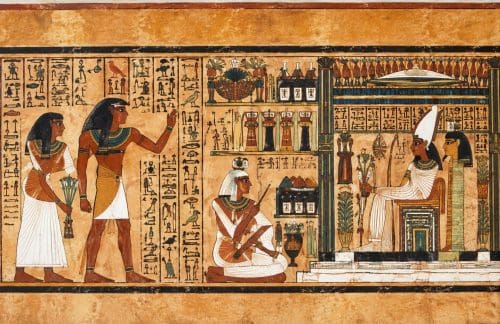
Ancient Egypt – KQ5 Part 2 – After-life lesson KS2
Understanding the Book of the Dead: from page to stage Using simple drama techniques to make a very old document come alive, this lesson involves pupils becoming the characters in…
Read More
Ancient Egypt – KQ5 – After-life lesson additional information – Dealing with sensitive issues
This supports the teaching of KQ5. As you know, pupils get very excited by whole topic of mummification. Whilst we rejoice in this enthusiasm, there is a danger that important…
Read More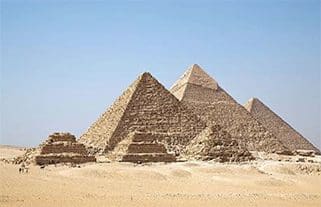
Ancient Egypt – KQ6 – What did Ancient Egypt have in common with other civilizations at the time?
The main activity here is called gallery. Pupils are shown images (printed from the KQ6 PowerPoint) which are displayed around the room, as if an art gallery. Pupils have to…
Read More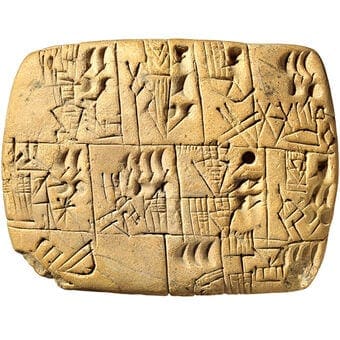
Ten things your KS2 pupils should know about language and communication in the ancient world.
This article should inform your teaching of the Ancient Civilizations topic Imagine a world without writing-without any writing at all: no literature; no news stories; no history even. No tax…
Read More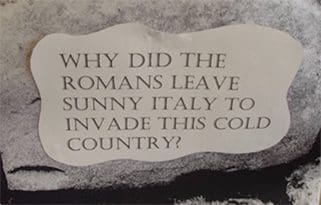
Roman Britain – KQ1 part 3 – The Roman invasion: have the books got it right?
This lesson follows on from the decision-making role play ‘Why did Claudius invade?’ Pupils are now asked to create a written explanation good enough to beat a textbook. To do…
Read MoreRoman Britain – Supporting KQ1 – Julius Caesar and the invasions of Britain. Why did he come?
Julius Caesar and the invasions of Britain. Why did he come? Exploring human motivation. When Julius Caesar invaded in successive years 55BCE and 54BCE what was on his mind? We…
Read More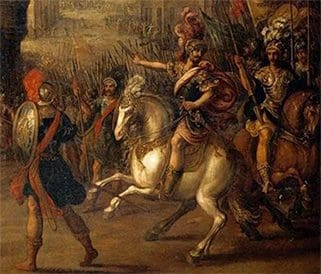
Roman Britain – KQ2 part 1 – Should the Celts take on the Romans? A reconstruction relay.
The Roman Army This highly active, boy friendly activity has proved extremely popular in schools and has led to some high quality learning because the children are fully engaged. The…
Read More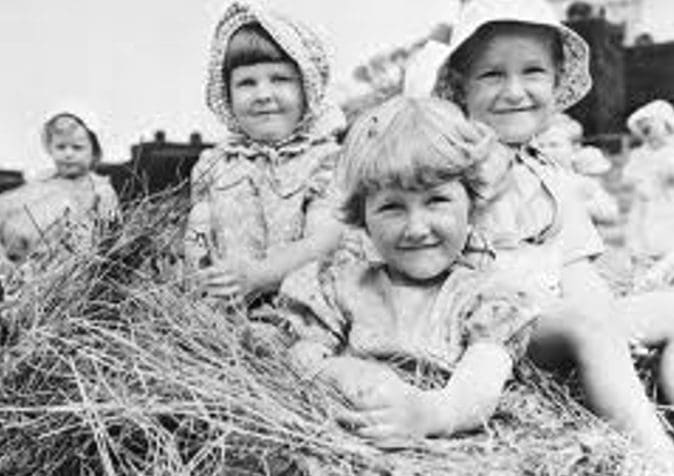
Beyond Face Value – KQ5 – Were the evacuees as happy as they were shown?
Two great tasks which together make up Key Question 5 of the Britain at War medium term plan, Why is it so difficult to be sure what life was really…
Read More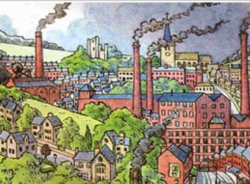
Victorian Britain – KQ1 – What were the main changes that took place during this time?
Motivating introductory lessons which, from the outset, challenges pupils to compare two images of the same place from the start and end of Victoria’s reign, before moving on to look…
Read More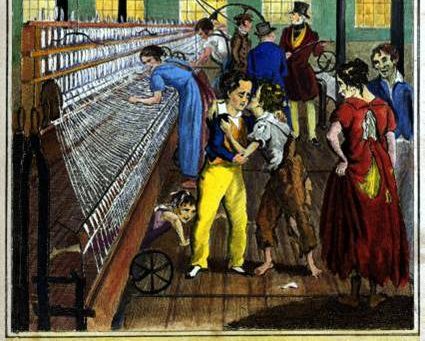
Victorian Britain – KQ2 – Children working in Victorian factories: was it as bad as they tell us?
This lesson is designed for Y5/6 pupils who already have a little knowledge of industrial change but have not yet studied cotton mills. Although the main part of the lesson…
Read More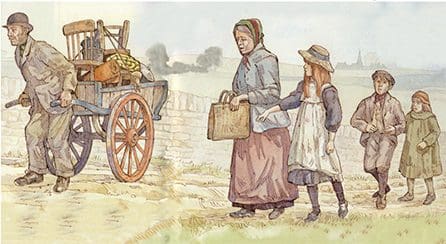
Victorian Britain – KQ3 – If life was so hard for families in the towns why did so many leave the countryside and move to the towns in Victorian times? – a history mystery
Starting a lesson with an apparent contradiction is a good way of engaging pupils interest. This ‘history mystery’ makes excellent use of pupils’ thinking skills, enabling them to make their…
Read More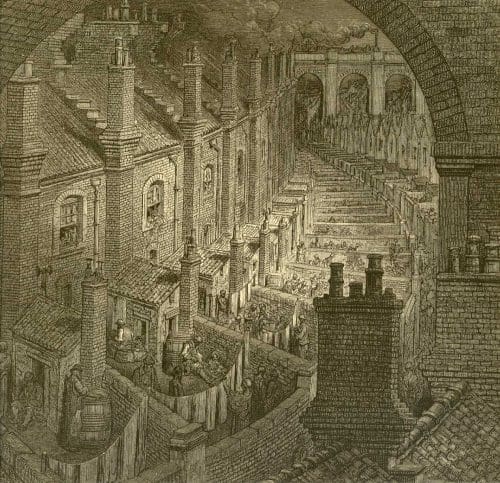
Victorian Britain – KQ3a – What the Dickens was life like in the Victorian cities?
This lesson makes extremely good use of a technique called creative tension. Pupils listen, with their eyes closed, to a spoken description which they then have to visualise in their…
Read More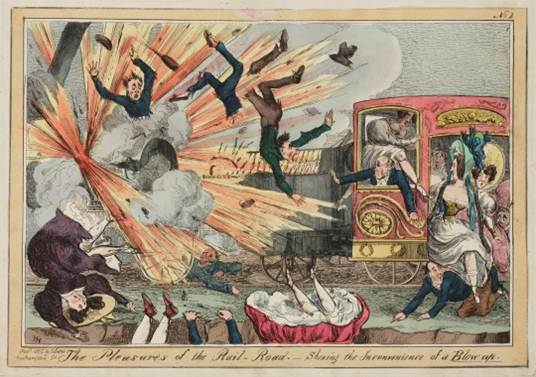
Victorian Britain – KQ4 – Victorian railways: winners and losers. A thinking skills activity leading to a role play
This active thinking skills lesson asks pupils to consider the likely effect of the coming of the railways on different groups in society before going on to take part in…
Read More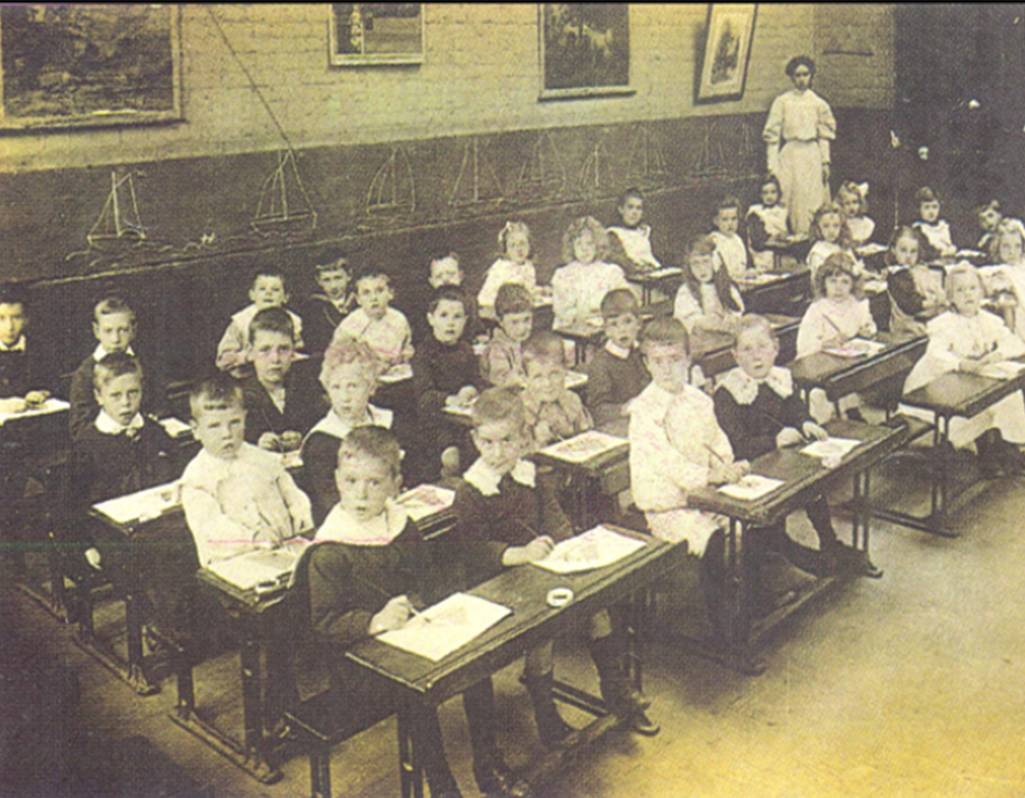
Victorian Britain – KQ5a – Going to school in Victorian times: can pupils write a paragraph for a KS1 textbook using photographs alone? SMART TASK Y3-5
This activity puts pupils in the role as researchers for a new book on Victorian schools. They have been commissioned to write a book for key Stage 1 pupils. Therefore,…
Read More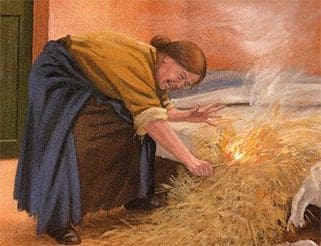
Victorian Britain – KQ5b – Victorian poor and the workhouse; what does Martha’s story tell us?
NB This is an additional lesson that does not appear on the planner. This topic couldn’t be more relevant to today. We frequently hear it said that the poor are…
Read More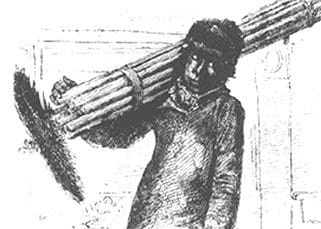
Victorian Britain – KQ5c – Climbing boys enquiry – SMART TASK
This enquiry falls into five parts: A selection of four related enquiry tasks which encourage pupils to explore and then evaluate evidence about the life of a climbing boy. The…
Read More
Victorian Britain – KQ6 – The Victorian Era: Dark Age or Golden Age?
This is the concluding lesson on the Victorians. It starts with a plate and a poster commemorating the achievements of Victorian Britain to set it in an international context. Pupils…
Read More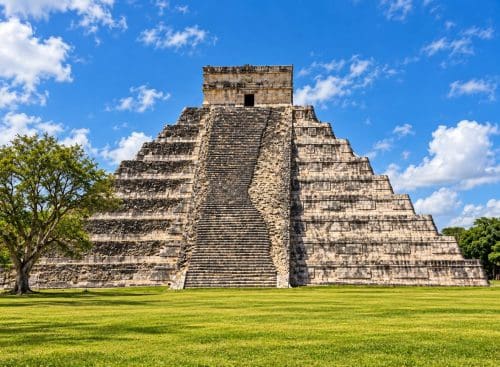
12 things you need to know about the Mayan civilization before you teach it at KS2
1. The Mayan settlements were among the largest anywhere in the world in year 1000 In the year 1000 settlements like Chichen Itza were among the largest settlements anywhere in…
Read More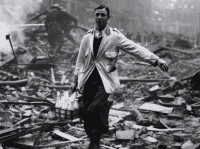
Beyond Face Value – KQ6 – The Blitz. What was photographer Fred’s clever way of beating the censors?
In this fascinating lesson pupils learn how photographers avoided the censors they saw in KQ5 and how the government used certain images of the Blitz as propaganda, even though they…
Read More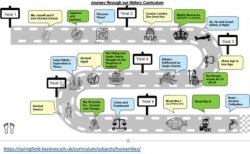
Plotting your pupils journey in history learning across the school
Just came across this visual depiction of the history curriculum at Springfield School in Hackney and thought I’d bring it to your attention. It has the great advantage of being…
Read More
Medium Term Planner for Thematic unit Beyond Face Value Year 6
This end-of-key stage unit fulfils the post-1066 thematic requirement of the National Curriculum, but it does so in a particularly imaginative way. Instead of looking at just one period, here…
Read More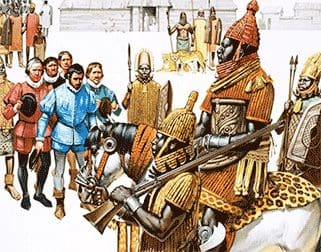
Benin – KQ1 – Why do YOU think we should study Benin in KS2 history? SMART TASK
After setting Benin in its context of place and time, pupils tour a gallery of images which give them hints as to why Benin might be a significant society, worthy…
Read More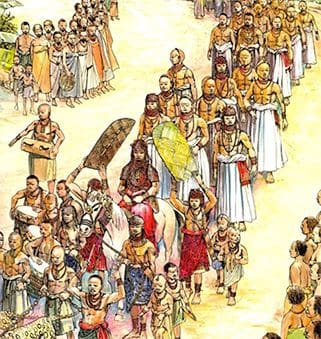
Benin – KQ2 – What sort of place was Benin 500 to 1,000 years ago? SMART TASK
Here pupils are introduced to the idea of a society from a distant time about which very little evidence remains. This can be frustrating for pupils who crave a clear…
Read More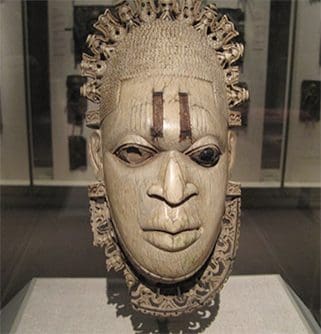
Benin – KQ3 – What can we tell about Benin society at this time from the images and artefacts that have survived?
Using evidence to study Benin This lesson revolves round four principal activities: Fastest Finger First; Mining for meaning, using an artist’s illustration; Call My Bluff which creatively uses images of…
Read More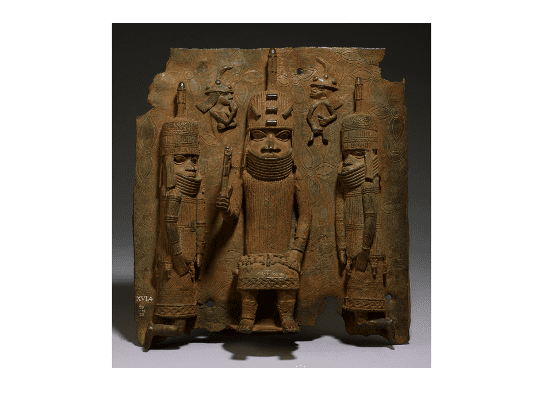
Benin – KQ4 – What changes took place when the European settlers started trading? Case study of one of the Benin bronzes
The first part of this session revolves around the encounter between indigenous Benin people and the European traders. It then looks briefly at the impact the European settlers had, looking…
Read More
Benin – KQ5 – Why did the Victorians get involved in Benin and what were the effects on the Benin people? SMART TASK
Following an intriguing slow reveal of an interesting Victorian photograph showing the capture of the Oda’s palace in Benin, pupils create their own living graph to show Benin’s changing fortunes…
Read MoreBenin – KQ6 – Should the Benin Bronzes be returned? SMART TASK
This lesson is guaranteed to provoke a lively debate. Armed with all the contextual knowledge they need, and stimulated by some thought-provoking quotations, pupils work in teams to advocate a…
Read MoreWritten by Neil Thompson

All content on Keystage history is written and quality assured by Neil Thompson, a former history teacher, county history adviser and Ofsted inspector with more than 30 years’ experience in history education.