
BIg picture of the past
 “Big picture” history teaching emphasizes the connecting of specific historical events and links topics to broader themes and contexts. It involves placing local, national, and global events within a larger understanding of the past. This approach helps pupils to develop a deeper understanding of historical continuity and change, and the interconnectedness of different historical periods. It also underlines the fact, which comes as a big surprise to many children, that Britain was not always more advanced than countries far from our shores. It is important that we explore histories that do not involve looking at events from the perspective of the winners of recent history. Read more here >>
What are we doing to help you?
For our part, we have decided to introduce a ‘Big Picture’ activity into each of our topic planners, indicated by this distinctive logo for easy reference.

While some of activities will be used more frequently than others, we have stuck to the principle of fitness for purpose rather than novelty for its own sake. By returning to familiar strategies you will, of course, be able to refine your teaching and pupils will get used to them too.
What types of activity are recommended?
Rather than provide you with just one recommended activity, we are also offering a list of others that work well too, so you can decide which suits your circumstances best.
- Nobody knew how to travel by sea until the Tudors built the royal navy.
- The Ancient Egyptians were miles ahead of any other civilization at the time.
- The Greeks were the first people to use myths to explain the world.
- Nobody outside Europe and Scandinavia had ever heard of the Vikings.
 | 1. Meanwhile, elsewhereThis device is central for drawing pupils’ attention to what was happening elsewhere at the time. In a recent book about the Maya pupils, who were cast as time travellers, were able to say that what they saw would have been happening at the same time as Alfred was fighting the Danes, something they had studied 2 terms before. Example question: When Stone-age Britons were hauling stones to make Stonehenge what were Egyptians doing? |
 | 2. When would you rather live?Here pupils are encouraged to compare living in one period with another, sometimes a different country. This works well when considering ways of life and characteristic features including freedoms or religion. This involves going beyond what some schools ask in terms of the Stone Age, Bronze Age or Iron Age to a more sweeping look at the past, say comparing Tudor with Victorian times. Obviously we would ensure that we addressed the key question of who you were. What was your status and perspective? |
 | 3. How different?Looking for similarities and differences, comparisons and contrasts is central to our history teaching from the start of KS1. So lets make sure we make the comparisons more complex as pupils move through the school. Ask Y5 pupils how different the role of women was in Ancient Greece with another periods the pupils would have studied? Another example might be when studying Mayan religious practices why not ask pupils to recall what they have learned about Ancient Egyptian beliefs, perhaps by focussing on the pyramids. When were they built? Who built them? How were they built? What were they used for? Then let pupils explore Mayan ‘pyramids’. What did they have in common? How did they differ? For example most Mayan ‘pyramids’ were not used as tombs but as temples for human sacrifice. You could also look at writing in the same way. How did their writing compare? Which is easier to read? |
 | 4. How long?Often pupils lose sight of the woods for the trees. Getting them to look at relative lengths of time opens up broader thinking. Go beyond just a big timeline to asking pupils to think about how the duration of the Roman occupation in Britain compared, say, with the period of Viking rule or even the Tudor / Victorian period. Showing this visually in terms of lengths of pieces of coloured card or shade a section on a timeline are useful ways to start. |
 | 5. Time TravellerEncourage pupils to return to a period already studied and ask how different life was then compared to their present topic in terms of the obvious aspects such as travel, houses, jobs etc. |
 | 6. AnachronismOne really fun way of establishing links and contrasts over time are anachronism pictures. The KS1 planner on Castles has a great example of the interior of the castle bedecked with things that would not have been there in medieval times. Fine, so spot these by all means but more importantly think about when they WERE introduced into this country. This forces pupils to range over time, maybe rather randomly at first but the more they practise the better they become at it. Other KS2 examples on the site include Egyptian and Victorian times. TheY6 thematic study on Keeping healthy through time looks at an anachronistic image from 1800. Pupils have to work out what would have been known and used and what had still not been invented, or even known about, at that time. |
 | 7. West is best?Pupils are shown carefully chosen images from 4 periods including the one they are studying. They have to place them in chronological order in terms of how ADVANCED the society looks. Without necessarily knowing anything about some of the periods they just use their clues from the images to make an educated guess. When the dates of the images are revealed to them they are amazed that the more advanced societies were not in Europe but in Africa or Asia, thereby acting as a useful countermeasure to any cultural chauvinism pupils might be harbouring. In the 10th century Baghdad was the largest city in the world, the epicentre of intellectual life. What about comparing bronze objects from the Shang dynasty with Benin and the Bronze Age in Britain? |
 | 8. Linked inWho would have people living in one time have connected with from the wider world? E.g. The Islamic civilization would have had an intricate network of trade links stretching all the way to those extreme corners of the Viking empire. |
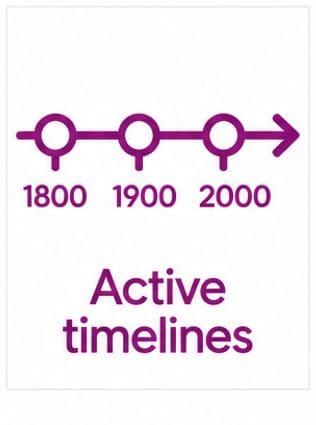 | 9. Active timelinesRead more about this in the section on chronology but the key point to make here is that pupils learn much better if they are given the job of sequencing period cards into a time line for themselves rather than just looking at one they have been given, no matter how appealing. Short fun tasks such as ‘which period is missing’ and ‘which are in the wrong order’ serve pupils well in terms of them gaining familiarity and confidence with the jigsaw of periods of the past. |
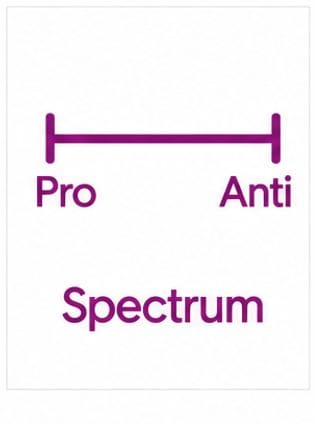 | 10. SpectrumPupils are given statements about the Big Picture to which they have to react. They ‘strongly agree’, ‘agree’, ‘disagree’ or ‘not sure’. This really makes pupils think about the rest of the world not just the period they are studying. Examples might include. |
All Big Picture Key Questions
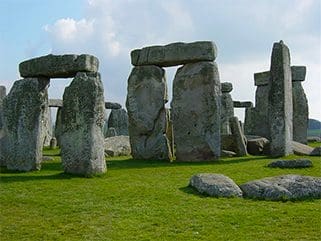
Stone Age to Iron Age – KQ4 – Why did they build Stonehenge?
Pupils are shown a video tour of the site and discover when, where, and how it was built. They speculate as to why it was built. Then play Call my…
Read More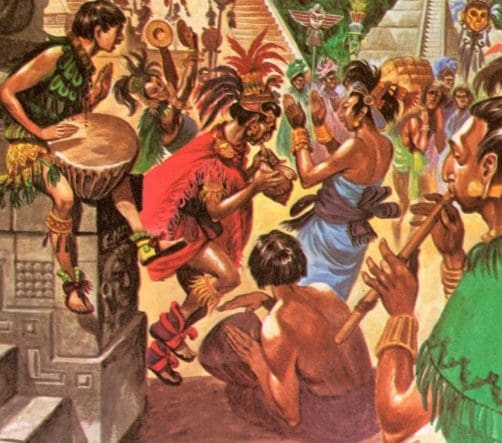
Mayan civilization – KQ3 – What was everyday life in Mayan civilization? How different was it for rich and poor?
Having been introduced to the nature of Mayan society with its clear hierarchy, and having seen various models and artists’ impressions of life in Mayan city states 1,200 years ago,…
Read MoreWritten by Neil Thompson
All content on Keystage history is written and quality assured by Neil Thompson, a former history teacher, county history adviser and Ofsted inspector with more than 30 years’ experience in history education.