Beguilingly simple, but actually quite thought-provoking, this short smart task teaches pupils not to take things at face value – a key skill if they are to progress in history. In this example they are helped to understand that all is not what it seems. Cautionary activities, such as this, provide pupils with memorable examples of the dangers of believing uncritically without due regard to provenance.
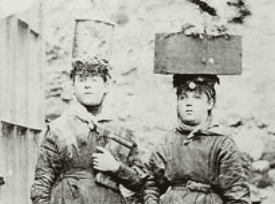
Start by showing the class the picture on the Powerpoint and ask them what they think it is meant to show.
Most pupils will say that the girls are doing some form of hard manual labour. The pickaxe seems enormous compared to the size of the women and they seem to be carrying heavy loads on their heads. They may not know what they are carrying but clearly it is a can of some description.
This is where the fun starts. Tell them that on the back of the photographs were the words Tredegar patch girls 1860s. So what can we now tell? The photograph shows two women miners from South Wales in mid-Victorian times.
Here comes the puzzle bit. Also written on the back were the words:
‘Copies may be had at any time’.
Why on earth would people want copies? Ask the pupils to try to figure this out for themselves.
Now stress that sources such as this need to be treated with caution because they were created for the purposes of their producers, and not necessarily with an eye to accuracy or truthfulness. They contain several layers of evidence and need to be analysed, evaluated and interpreted with this in mind. Arthur Marwick, a former professor of history at the Open University, suggests that primary sources contain both intentional and unintentional evidence. In this example there is a deliberate message conveyed by the photograph – the pose, demeanour and expression of the women. Then there is the unintended information it conveys about the contemporary interest in women workers. We are told this is one of forty-nine studio photographs of Welsh patch girls and that this was a commercial undertaking, with copies readily available for collectors. But we also need to know why the photograph was taken, who the buyers were and whether these images were wholly accurate depictions of such workers. In the case of our patch girls these were commercial photographs of working women who were seen as curious objects at the time. Many were sold as postcards and some to collectors.
The fact that women in the coal industry were such curiosities that photographers sought them out as subjects and customers purchased the images, says something about attitudes to women and work in the mid-Victorian era. The photograph intentionally shows the dignity and pride of the women, and the large pickaxe and the equipment they carry accentuate their small stature and strength. The photographer deliberately exaggerated certain features in order to increase the curiosity of the scene. At the time, there was a major debate over whether it was right for women to undertake dangerous heavy manual work more usually associated with men. For many middle class commentators this type of work destroyed the women’s feminine attributes.