Below is an account of an assessment task on Boudicca , with downloadable resources, just one of many assessed tasks on the site. You will find at least one for each history-led topic covering the full range of skills and concepts. They tell you what children can do unaided. They are designed to take no more than 20 minutes. Accompanying each task is a mark scheme which shows the criteria ‘for assessing’ the answer. These are usually laid out as below average, average , above average with occasional use of just below, just above, well above etc. As well as the criteria there are also examples of how children have answered the tasks to help with peer assessment.
In terms of formal end-of-key-stage assessment or APP, I have shied away from using National Curriculum level descriptions. These were designed to be used at the end of Y2 and Y6 only. No longer are you required to report using these. You will however want to explain to parents what their child can do in history and what they need to do to improve. Each assessed task forms, along with other evidence, the parts of the jigsaw that, when combined, give a picture of strengths and areas for development across all the skills.
To help you gain confidence with your judgements I have included a range of samples of pupil’s work on the PowerPoint presentations. You will see from my commentary how I would judge the work.
Please note that pupils find some skills and concepts harder than others. In my experience pupils understanding of interpretations, as in this example, lag up to a level behind their grasp of other ‘key elements’.
If you have pupils’ work you would like a second opinion on, just scan it , attach it to an email and I will respond. Please don’t send me your week’s marking!
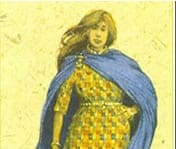
The background to this assessment task is that Year 3/4 pupils have studied Boudicca’s appearance. Indeed they have even painted their own version based on a Roman description that was read out to them and left on the whiteboard. Pupils then compared their paintings with other groups in the class. The next step revealed some alternative images from modern textbooks which showed her looking more serene and conciliatory. Following discussion as to why versions might be so different; pupils were given a puzzle to solve. They were presented with two images A and B (shown on the downloadable resource) that they had not seen before and asked two questions.
1. What are the main differences in the way Boudicca is shown in the two pictures?
2. Why don’t both pictures show her looking the same?
You can find out more about assessments like this by going to KS2 assessment where you will find mark schemes and examples of pupil’s work. For a flavour of what pupil’s responses look like open the downloadable resource.