This section accompanies the ones on teaching and learning approaches. It offers you a few ideas you may not have tried for a while, or at least not within the current topic. It is always a good idea to whet pupils’ appetite for a topic by thinking of a creative product, particularly one which gives scope for pupils to develop their own imaginative ideas. Good for motivation but also for creativity.
Audio-visual commentary
Pupils provide a spoken commentary e.g. for some selected pictures of mysterious looking Ancient Greek or Egyptian objects, as if for someone using a headset in a museum today. This gives the activity real purpose and, of course, a certain appeal to reluctant writers!
Bank notes
The government has just decided to commemorate a civilization of people e.g. the Romans. As a tribute to their legacy, a set of bank notes to the value of £50, £20, £10 and £5 has been commissioned. But they are not sure what image should be placed on each. First pupils brainstorm the possibilities, then they prioritise and finally decide how they will illustrate. Each member of the group of 4 illustrates a different legacy.
Diary
Could be pages from a physical diary such as Henry VIII’s as he goes through the turbulent late 1520s or even a visit to Big Brother’s diary room. What would Henry say? I just cannot commit. I have problems with my wives ….
Display
(see curator’s dilemma in the learning activities section). Pupils have to sum up life in Victorian Britain, but can use just 5 pictures in their display. Which will they select? Each group offers a critique of others’ choices e.g. not enough about the great achievements in health and hygiene, too much on the bad side etc
Film crew
e.g. accompanying Howard Carter and interviewing him after he had discovered Tutankhamun’s tomb. Pupils work in pairs. One has to be the interviewer the other the explorer. So pupils have to generate questions as well as answer them. Making it real like this adds a certain appeal and is an interesting non-written outcome.
Letters to MPs
e.g. Y6 protesting about the Elgin marbles suggesting they should be returned to Athens. I have seen some excellent examples of persuasive writing using this as a medium, so really good for literacy.
Living graph
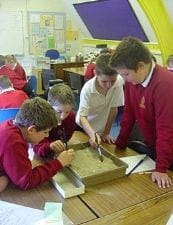
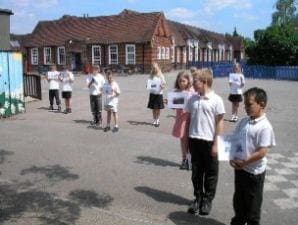
Pupils are each given an event card which they then have to sequence. With pupils standing in a line in chronological order, you ask them to step forward if they think the event was good/happy/successful for the person and step back if bad/unhappy/failure. As you can see from the image opposite, this creates a clear shape and shows pupils how things change for the better or worse and rarely stay the same. Pupils could draw their own line graphs to the same shape and then try to annotate two or three places where the graph goes up or down. See the example of The Highs and Lows of Catherine of Aragon in the Tudor section of Outstanding Lessons.
Magical mystery tour
To help children understand that buildings we see around us in Britain today come from hundreds of years ago, pupils have to plan a tour of, say, Tudor buildings. But what Tudor buildings would have survived and where would we find them? This makes pupils think about churches and palaces and wealthy people’s houses. Certainly not much evidence of the existence of the poor, except perhaps the stocks! Good for awareness of local history too. Can pupils think of the nearest building to the school that would have been there 500 years ago?
Making a museum
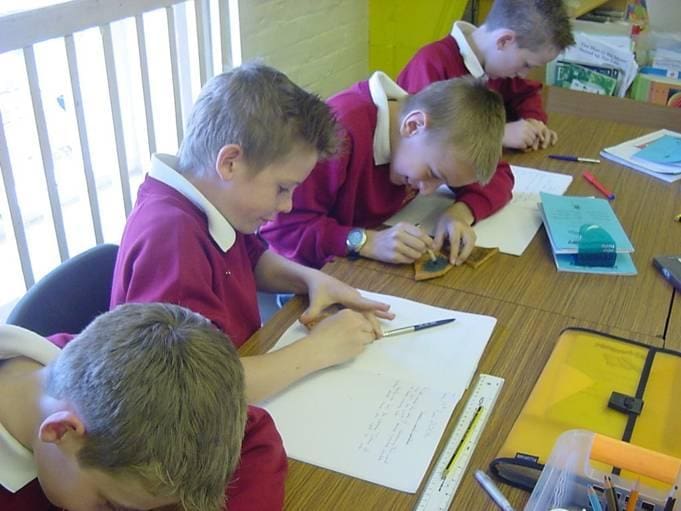
Pupils physically make one object each which they contribute to a class museum on the topic. It could be the Greek legacy, or what Victorian schools were like. As a class they need to brainstorm ideas and then allocate creative roles. Best done in pairs with scope to work creatively at home too. Makes pupils think about the objects that people would have used and the physical activity of making helps deepen their understanding as well as having cross-curricular benefits.
Placemats
A company specialising in historical placemats wants to commission schoolchildren to design a set that captures the spirit of a group of people or period from the past. They don’t want just one image. In fact they have a rule that it must be a pastiche of 10 stuck together. Some can be drawn, others photocopied. But which will the children select? Which will be the largest images? How will they be put together? Show a placemat to give them an idea of size but encourage them to be creative in how it will be illustrated. If it were a Roman Britain placemat, what would it show? Would it be soldiers or villas, Claudius or Boudicca, or both?
Plate to commemorate
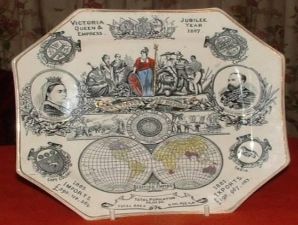
e.g. Victoria’s Golden Jubilee, showing her principal achievements decorated on the plate.
Posters
To advertise a new film/exhibition, but they must be historically accurate. Which episode from the event will feature? How will you check for historical accuracy? Stress the need to cross-reference a range of sources.
Powerful PowerPoints
When pupils work together on different aspects which are pulled together into one complete show, rather than 10 presentations on the same topic which quickly lose pupils’ interest.
Role play
e.g. Imaginary scene within a family weighing up whether to return to the city during the Phoney War. Works best when there is a real dilemma. See Outstanding Lesson on “Why did Wilf take his family from the country to the town in Victorian times?”.
Stamps
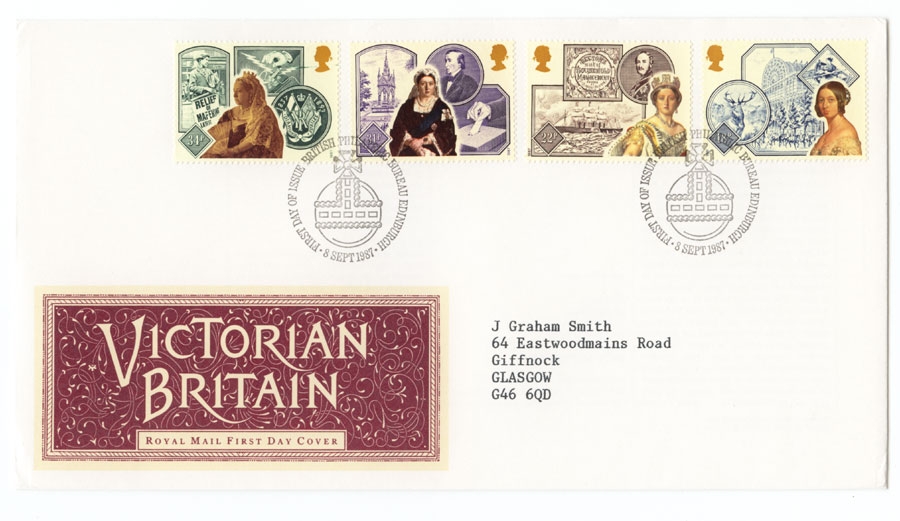
Summarise the achievement of the Ancient Greeks using just 5 stamps to the value of £5, £4, £3, £2, and £1. Which achievement deserves the highest value stamp? What is the best drawing to show particular achievements? Pupils create a few drafts before drawing their ‘best’ one on an A5 sheet. Pupils in other groups evaluate each others’. You could draw pupils’ attention to models such as the one shown in the Image Gallery.
Still image / thought tracking/ tapping in
Pupils in role could be members of a family that has moved from the country to the town in Victorian times (see Outstanding Lesson on Victorian Britain). As each member of the family literally moves to the town, you tap in, asking individuals why they are taking this action when life in the industrial towns sounds so harsh.
Talking heads
Works well when dealing with differences in viewpoint. For example, pupils in pairs go head to head as patriotic Spanish and English historians giving contrasting views of why the Armada failed (see Outstanding Lesson; Why did the Armada fail?)
Tourist brochure
This could either present the much maligned Vikings in a more positive light or could show the legacy of Ancient Greece or Rome on Britain.
Wiped commentary
This is an excellent and very challenging idea, described in an Ancient Greece Outstanding Lesson “The answer lies on the pot”. Pupils have to create their own commentary having studied a range of stimuli and reference books. Only when they have finished and presented their commentaries does the original mysteriously turn up. So how did the pupils’ one compare? Plenty of scope for higher-order evaluation here.
Zig-Zag book
Pupils create their own simple zig-zag book from a piece of card, giving it 6-8 panels of folded card, as if a small book. The topic is the Vikings and whether they were raiders or traders. On the front page they draw a stereotypical pictures. Then on the following pages they draw pictures of evidence that made them change their mind. Then on the final page they draw what they think of the Vikings now.
Resources
Designing a snakes and ladders board game on the ups and downs of Brunel’s career
Making a human living graph in the playground to show the highs and lows of Boudicca’s revolt
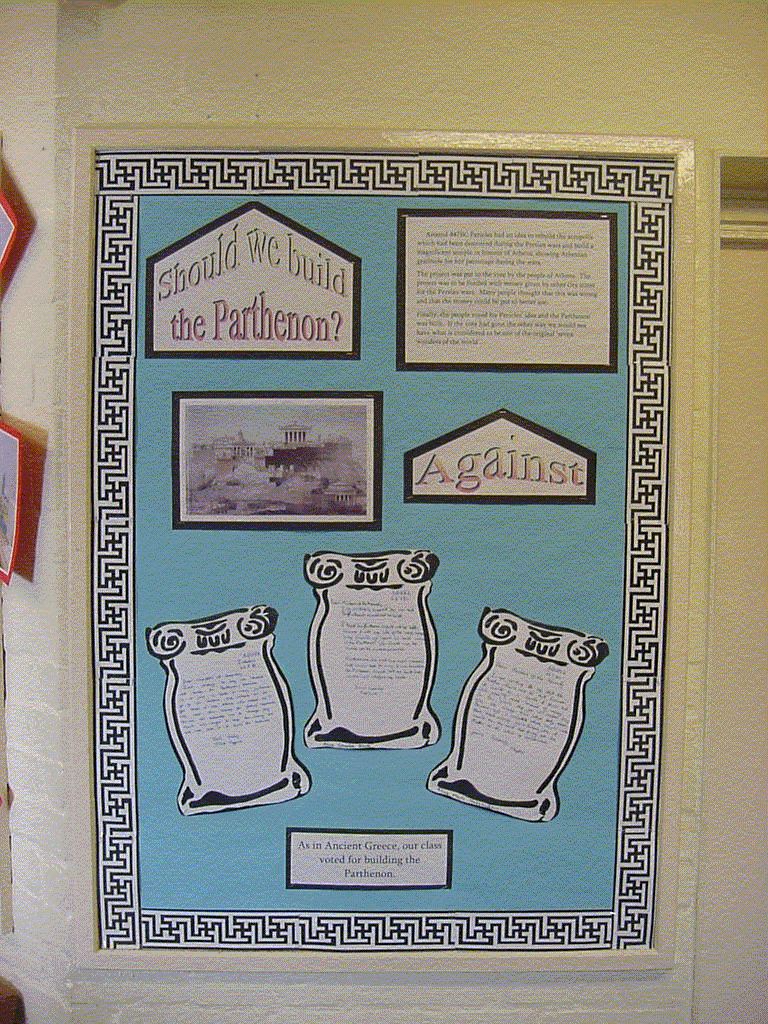
Wall display. Should we build the Parthenon?