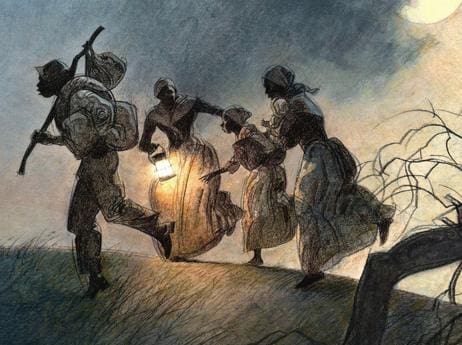
This short enquiry enables pupils to come up with their own ideas about runaway slaves working from first hand evidence of adverts for the slaves ‘arrest’. They work in pairs to come up with possible reasons why some slaves were caught and not others and they test their hypotheses against the evidence. This is not only a fun enquiry it also helps pupils to work both independently but also as part of a creative, collaborative team. This provides students with an opportunity to consider some of the conditions and circumstances that might have accompanied the act of slaves running away. While we have no definitive information regarding the success or failure of the runaway efforts chronicled in the advertisements, students can use the information in the advertisements to make an educated guess.
I am grateful to Tom Costa, University of Virginia, for providing the inspiration and most of the resources for this enquiry.
Learning objectives
Pupils should be able to:
- identify some characteristics of runaway slaves in the 18th century
- recognize what slaves needed in order to be successful when running away
- generalize about the success of specific runaways in obtaining freedom
- construct a narrative description of how a slave might be successful in running away
Step 1
Quickly explain the background to slave runaways and then ask pupils to list the things that would be helpful in making a successful escape and those things that would have lowered their chances. The sort of issues pupils might think of include; whether they are alone; what they take with them; their skills at survival; how fit they are; their local knowledge. All can make a useful contribution here, so encourage paired work.
Step 2
Pupils are then shown how we know about runaways from adverts. They are taken through one example using the PowerPoint slides 4-8.
Step 3
Using a technique called talkaloud, the teacher talks through the contents of another advert showing what to do when difficult words crop up. Slide 14, 15 and 16 model this for you. You are advised to make a copy of this and read it as you show slides 9-13. Kids will be very impressed that you can read the advert and understand 18th century English!
Step 4
Now give pupils a set of 5 adverts chosen from The Geography of Slavery (University of Virginia) site, working in groups of 2 or 3. Pupils should complete the chart provided (What helped a runaway slave be successful), as they read the runaway advertisement. Completing the chart will help students generalize about whether slaves were successful in their efforts at running away. Remind them not to fuss too much about fine detail of every item of clothing, summing up instead by using phrases such as smartly or well-dressed. Pupils should be reminded that the information in the runaway advertisements was written from the owner’s point of view.
Step 5
Now ask one person from the group/pair what they have found out. In their presentation students should indicate what factors they think would be most likely to make a successful runaway. Tally the results and determine who the class thinks would be most likely to succeed and why. Discuss the results of students’ work.
Step 6
Pupils could write a short journal entry that describes one slave’s plan to run away. This journal entry should include information about what a slave would need to be successful, such as: clothes, tools, skills, and language proficiency, or friends. In addition, the description should include an indication of the best time to run away and a general description of how a run away could travel from place to place. You might consider the labelling of a runaway slave – see downloadable resource – a more appropriate alternative.
Resources
 Planning an escape as a runaway slave
 Chart: What helped a runaway slave be successful
How to be successful as a runaway
Credits
Resources © Copyright Tom Costa and The Rector and Visitors of the University of Virginia can be found at this website.
We are grateful to Tom for kindly allowing us to adapt his original approaches to suit a UK audience.